Skip to content













The fastest way to make a water heater more efficient is to drop the thermostat to 120 degrees, flush the sediment out of the tank, and insulate the first six feet of hot pipe. Those three steps take one afternoon, cost very little, and cut standby losses before you spend anything on equipment.
Key Takeaways
- Water heating is typically the second largest energy use in a home, behind heating and cooling.
- 120 degrees is the recommended setting. Every 10 degrees above that adds measurable cost.
- Sediment insulates the burner from the water and quietly raises every bill.
- Low flow fixtures reduce hot water volume without a noticeable change at the shower.
- A tank jacket only helps on older units. New ones are already well insulated.
1. Set the Thermostat to 120 Degrees
Plenty of units leave the factory set at 140 degrees. That is hotter than any household needs, and the extra heat costs money every hour whether anyone uses hot water or not.
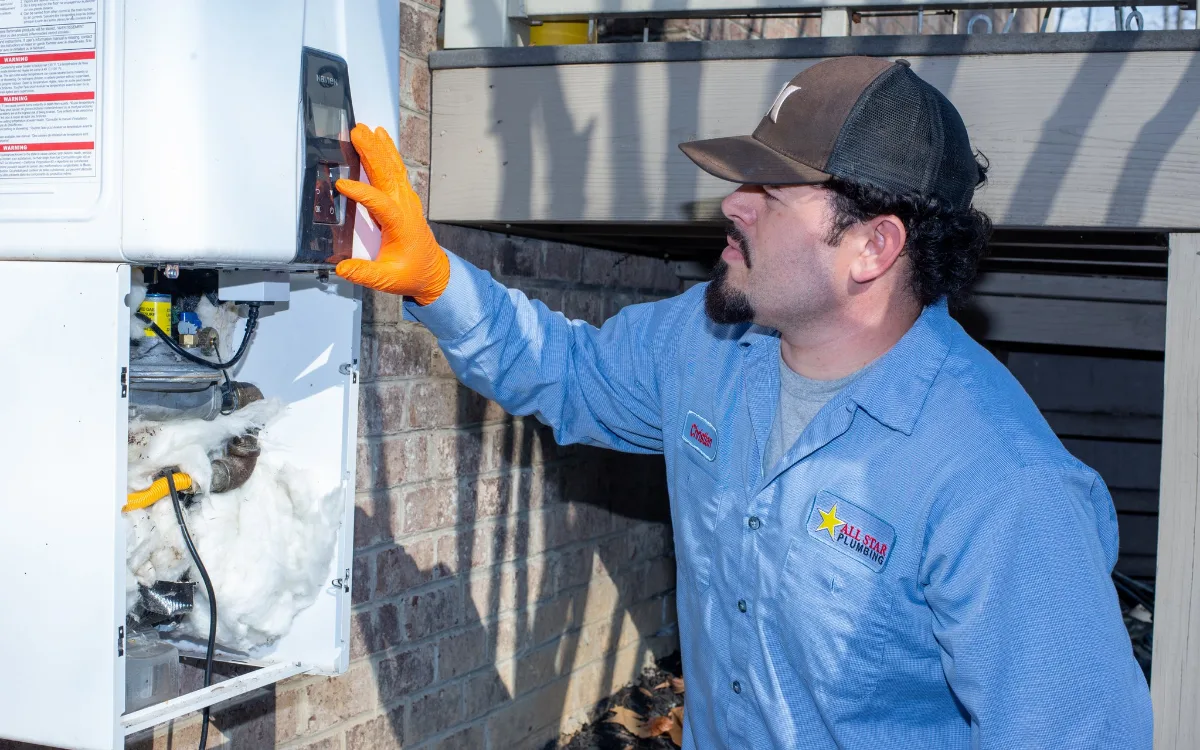
Dropping to 120 degrees reduces standby heat loss, slows scale formation inside the tank, and removes a real scalding risk. On a gas unit the dial is on the control valve. On electric there are usually two thermostats behind access panels, and both need to match.
The Department of Energy water heating guidance puts 120 degrees as the standard recommendation for most households. If someone in the home has a compromised immune system, discuss the setting with a doctor first, since very low tank temperatures can allow bacterial growth.
2. Flush the Tank Every Year
Sediment settles on the bottom of the tank and forms an insulating crust between the burner and the water. The burner then runs longer to reach the same temperature, and everything downstream of that costs more.
A yearly flush restores the rated recovery time. Twice yearly if you are on a well or already see hard water signs. The popping and rumbling that many Triad homeowners live with is that sediment layer announcing itself. Our annual water heater maintenance service covers the flush plus the anode rod.
3. Insulate the First Six Feet of Pipe
Every time the heater cycles, hot water sits in the pipe leaving the tank and gives up its heat to the room. Foam pipe sleeves cost a few dollars per length and take twenty minutes to fit.
Insulate both the hot outlet and the cold inlet for at least six feet. The cold side matters because convection carries heat up into that pipe as well. Keep insulation at least six inches clear of the flue on a gas unit.
4. Add an Insulating Blanket to an Older Tank
Any tank warm to the touch is losing heat through its shell. Units from the 1990s and early 2000s often have thin insulation, and a jacket rated R-8 or better makes a clear difference.
Skip this on a newer unit. Modern tanks carry enough foam insulation that a blanket adds little and can interfere with the thermostat or the flue. Never cover the top of a gas unit, the burner access, the thermostat or the T and P valve.
5. Fix Every Hot Water Leak
A dripping hot tap wastes water and the energy used to heat it. A single fixture dripping once per second wastes thousands of gallons a year, and on the hot side every one of those gallons was paid for twice.
Check under sinks, around the base of toilets, at the water heater connections and at outdoor spigots. The EPA leak data puts average household leakage near ten thousand gallons annually, and a good share of that is hot.
6. Reduce the Hot Water You Actually Draw
Efficiency is not only about the appliance. The volume matters as much as the equipment.
- Low flow shower heads at 2.0 GPM or less cut hot water use noticeably. Modern designs maintain pressure by changing the spray pattern, so the shower still feels the same.
- Faucet aerators at 1.0 to 1.5 GPM cost a few dollars and take a minute to fit.
- Cold water laundry handles most loads. Modern detergents are formulated for it.
- Full dishwasher loads use less hot water per dish than washing by hand.
- Shorter showers. Two minutes off a daily shower is roughly five gallons of hot water per person per day.
Fixtures carrying the WaterSense label meet the EPA efficiency criteria while still being tested for performance, which is the part homeowners usually worry about.
7. Right Size the Replacement When the Time Comes
An oversized tank loses standby heat around the clock for capacity nobody uses. An undersized one runs constantly. Both waste energy in different directions.
When a unit reaches the end of its life, size the replacement against your real peak hour demand rather than defaulting to the same number. Our guide on water heater sizing walks through the arithmetic.
Tankless units eliminate standby loss entirely, which is their main efficiency argument. They suit households with moderate simultaneous demand and cost more up front. Our tankless installation page covers where that trade works out.
What Triad Weather Does to These Numbers
Water heating cost is not flat across the year, and that matters for which steps pay back fastest here.
Incoming groundwater in Guilford and Forsyth counties sits near 68 degrees in August and drops to about 50 degrees in January. Heating water from 50 to 120 is roughly a third more work than heating it from 68 to 120, so the same household sees its water heating bill climb noticeably in winter without changing a single habit.
That seasonal swing is why pipe insulation and the thermostat setting matter more in a Triad winter than the raw numbers suggest. A heater in an unconditioned garage or crawlspace also loses heat to a 30 degree space rather than a 70 degree one, which is where a tank blanket earns its place on an older unit.
If your hot water suddenly feels shorter in January, that is usually the temperature rise rather than a failing unit. A heater that was marginal in summer becomes undersized in winter.
What Each Step Is Actually Worth
| Action | Effort | Relative Impact |
|---|---|---|
| Lower thermostat to 120 | Five minutes | High |
| Annual tank flush | One hour yearly | High |
| Insulate hot and cold pipe | Twenty minutes | Moderate |
| Tank blanket on older unit | Thirty minutes | Moderate |
| Fix hot water leaks | Varies | High |
| Low flow fixtures | One afternoon | Moderate to high |
| Right sized replacement | At end of life | High, long term |
Frequently Asked Questions
What temperature should my water heater be set to?
120 degrees for most households. It is hot enough for every normal use, reduces scalding risk, slows scale formation and cuts standby loss compared with the 140 degree factory setting.
Does flushing a water heater really save money?
Yes, on any unit with a sediment layer. The crust on the tank floor sits between the heat source and the water, so the burner or element runs longer for the same output. Flushing restores the original recovery time.
Is a tankless water heater more efficient?
It eliminates standby loss, which is real. Whether that pays back depends on usage pattern, incoming water temperature and installation cost. Households with low to moderate hot water use see the clearest benefit.
Should I turn off my water heater when I go on vacation?
Use the vacation setting on gas units rather than shutting it off entirely, which keeps the pilot lit. For electric, switching the breaker off for a week or more is fine. Allow a few hours to recover on your return.
Do water heater blankets work?
On older units, yes. On modern tanks with factory foam insulation, the gain is small. Test by touching the tank. If it feels warm, a blanket helps. If it feels room temperature, skip it.
How much of my energy bill is water heating?
Typically the second largest share in a home after heating and cooling. That is why small percentage improvements here show up on the bill in a way they do not elsewhere.
Lower Your Water Heating Costs in High Point
Most of these you can do in an afternoon. The flush is the one worth handing off if your drain valve is original, because a seized valve turns a maintenance job into a replacement.
We check thermostat settings, burner condition, recovery time and the anode rod on every maintenance visit, and we tell you plainly whether a unit is worth maintaining or worth replacing.
All Star Plumbing
4003 North Main Street
High Point, NC 27265
Phone: (336) 462-1080
Hours: Open 24 hours, 7 days a week
NC Plumbing License #15130
Find us on Google Maps
Family owned since 2007, serving High Point, Greensboro, Winston-Salem and the surrounding Triad. Schedule a water heater tune up and get the efficiency back.