Skip to content













Most of the plumbing calls we take in High Point could have been avoided with twenty minutes of attention a few times a year. Not big projects, just looking at the parts that wear out and dealing with them before they fail. These plumbing maintenance tips are the ones our technicians actually give customers, sorted by how often to do them, so you can work through the list without needing tools you do not own.
Key Takeaways
- Look under every sink with a flashlight twice a year. Most leaks announce themselves early.
- Flush the water heater once a year and test the relief valve while you are there.
- Keep grease and wipes out of the drains. Those two habits prevent most clog calls.
- Test your main shutoff valve annually so it works when you need it.
- Check your water pressure. Anything over 80 PSI shortens the life of everything in the system.
Once a Month: Quick Looks That Take Minutes
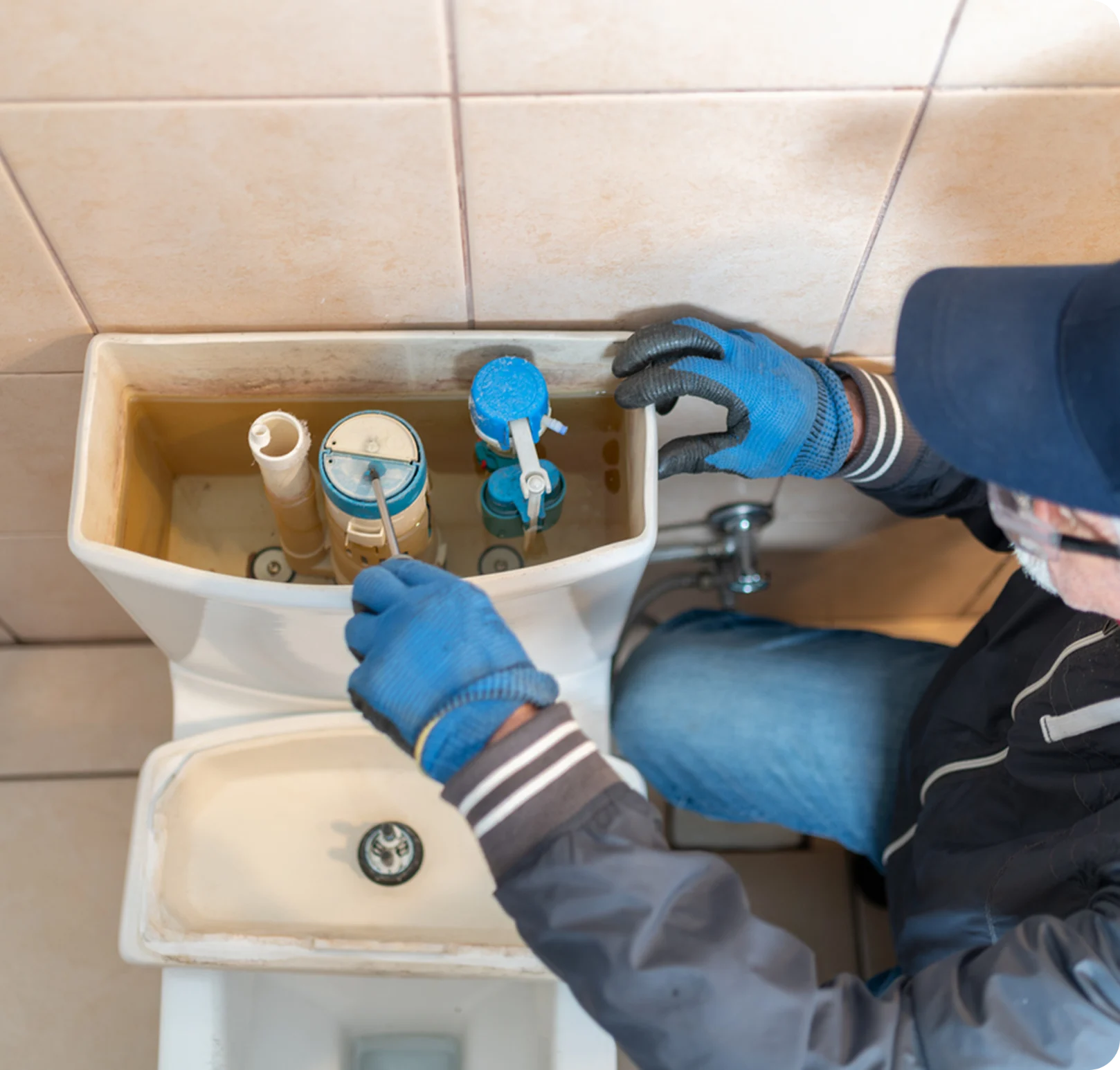
Run water in any fixture you rarely use, such as a guest bathroom, so the trap does not dry out and let sewer gas into the room. Listen for a toilet that refills on its own, which means the flapper is leaking. Glance at the floor around the water heater and under the kitchen sink.
These take almost no time and catch the slow problems. A toilet that runs for a month costs real money on the water bill and is usually a five dollar part. A damp cabinet floor caught in month one is a fitting. Caught in month six it is a cabinet.
Twice a Year: The Real Inspection
Take a flashlight and open every cabinet with plumbing in it. Look at the supply lines, the shutoff valves, the trap and the underside of the sink basin. You are looking for green or white crust on fittings, damp spots, and any sign of a drip that dried. Feel the braided lines for stiffness.
Then read your water meter with everything in the house turned off. If the low flow indicator moves, water is going somewhere it should not. The EPA guide to household leaks explains how much a small leak adds up to. Our post on spotting a hidden pipe leak covers what to do if the meter moves.
Once a Year: Service the Water Heater
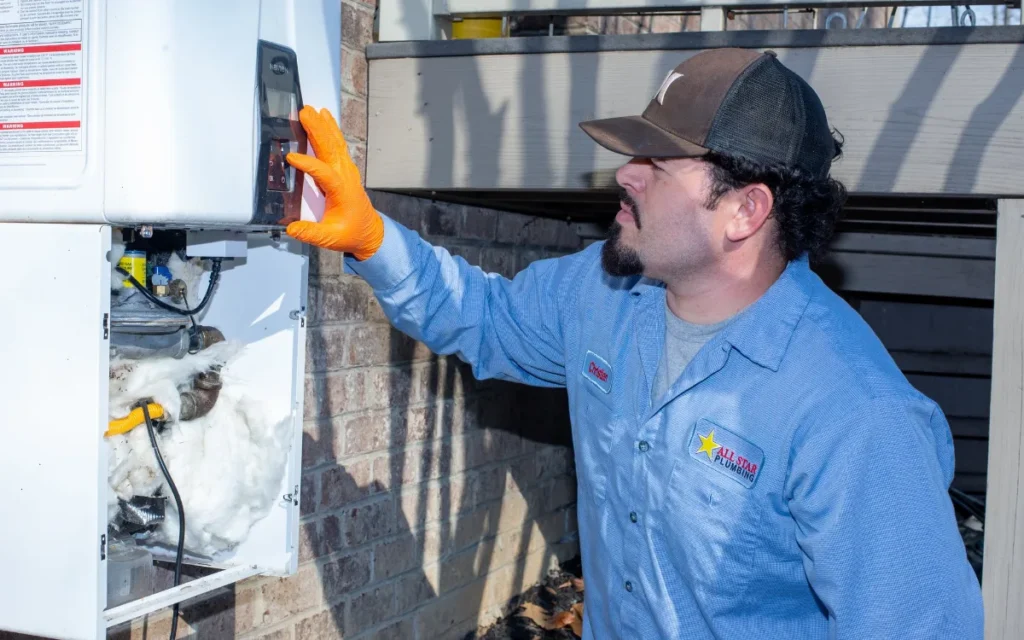
This is the single highest value maintenance job in the house. Flush a few gallons from the drain valve to clear sediment, lift the lever on the temperature and pressure relief valve to confirm it opens and reseats, and check the thermostat setting. Most households are comfortable and safe at 120 degrees.
If the tank is more than about eight years old, have the anode rod checked while you are at it. A spent rod means the tank itself is next. Our annual water heater checklist walks through the whole routine step by step, including when not to flush an old tank.
Once a Year: Test the Shutoffs
Find your main water shutoff and turn it fully closed, then open it again. Old gate valves seize, and you do not want to discover that while water is running across a floor. Do the same with the stop valves under sinks and behind toilets.
If any of them will not turn or will not seal, have them replaced with quarter turn ball valves. It is a small job that pays for itself the first time you need to isolate one fixture instead of shutting down the whole house.
Check Your Water Pressure Once a Year
Screw an inexpensive pressure gauge onto an outdoor spigot or the washing machine bib and read it with nothing else running. Between 40 and 60 PSI is comfortable. Anything above 80 PSI is over the limit most plumbing codes allow and puts constant strain on every joint, valve, hose and appliance in the house.
High pressure is one of the most common causes of repeat leaks and of water heaters that fail early. A pressure reducing valve solves it permanently. Our post on high water pressure in the house explains how to measure it and what the fix involves.
Habits That Prevent Most Drain Calls
Grease is the biggest single cause of kitchen line clogs. It goes down liquid and sets solid on the pipe wall a few feet in. Pour it into a can and bin it once it cools. Wipe greasy pans with a paper towel before washing.
In the bathroom, a hair catcher over the tub and shower drain stops the mats that cause most bathroom clogs. Nothing labelled flushable belongs in a toilet except toilet paper. If a drain is already slowing repeatedly, our post on why a drain keeps clogging explains why clearing it is not the same as fixing it.
What to Do Before Winter and Before a Long Trip
In the fall, disconnect and drain garden hoses, close any interior valves that feed outdoor spigots, and add foam sleeves to pipes in the crawl space or garage. A connected hose is the most common reason a hose bib splits behind the wall.
Before a trip longer than a weekend, close the valves to the washing machine, leave the heat on at least 55 degrees in winter, and consider shutting off the water at the main. A leak with nobody home is the worst version of every problem on this page.
| How often | What to do | Why it matters |
|---|---|---|
| Monthly | Run unused fixtures, listen for a running toilet | Keeps traps sealed, catches worn flappers |
| Twice a year | Flashlight check under sinks, read the meter | Finds leaks while they are still cheap |
| Yearly | Flush the water heater, test the relief valve | Sediment is the top cause of early failure |
| Yearly | Turn the main shutoff and fixture stops | Seized valves fail during emergencies |
| Yearly | Measure water pressure with a gauge | Over 80 PSI damages the whole system |
| Each fall | Drain hoses, insulate exposed pipe | Prevents split spigots and burst lines |
| Every 5 to 8 years | Replace braided supply lines | Rubber cores harden and let go without warning |
Plumbing Maintenance Tips: Frequently Asked Questions
What are the most important plumbing maintenance tips?
Flush the water heater once a year, check under every sink twice a year with a flashlight, read the water meter with everything off to catch hidden leaks, test the main shutoff annually, and keep grease and wipes out of the drains. Those five cover most avoidable failures.
How often should I flush my water heater?
Once a year for most homes, and more often on hard water. Flushing carries loose sediment out before it hardens on the tank floor. On a tank that has gone a decade with no service, ask a plumber first, because disturbing heavy sediment can expose a weak spot.
What water pressure should a house have?
Between 40 and 60 PSI is the comfortable range. Most plumbing codes cap it at 80 PSI. Above that, joints, valves, appliance hoses and water heaters all wear faster. A pressure reducing valve brings a high pressure house back into range.
How do I stop my drains from clogging?
Keep cooking fat out of the kitchen sink, use a hair catcher in the tub and shower, and flush nothing but toilet paper. Those three habits prevent most residential clogs. If a drain still blocks repeatedly, the pipe itself may need attention.
Should I replace supply lines under my sinks?
Yes, on a schedule of roughly five to eight years. The braided steel outer layer hides a rubber core that hardens with age and fails without warning, usually while nobody is home. They are inexpensive and quick to swap.
How do I find my main water shutoff valve?
In most Triad homes it is where the supply line enters the house: a crawl space, garage wall, utility room or near the water heater. There is also a valve in the meter box at the street. Locate yours and turn it once a year so it does not seize.
Plumbing Maintenance Across High Point and the Triad
If you would rather have someone go through the house once and tell you what needs attention, we do that. All Star Plumbing of the Triad has been family owned in High Point since 2007 and serves Greensboro, Winston-Salem, Kernersville, Jamestown and the surrounding towns. Call (336) 462-1080 or request a free estimate.