 Skip to content

Broken Pipe? We Repair and Replace All Types
Water pipes, sewer pipes, gas lines, underground lines — professional pipe repair throughout the Triad.












Pipes Don't Last Forever — We Fix Them When They Fail
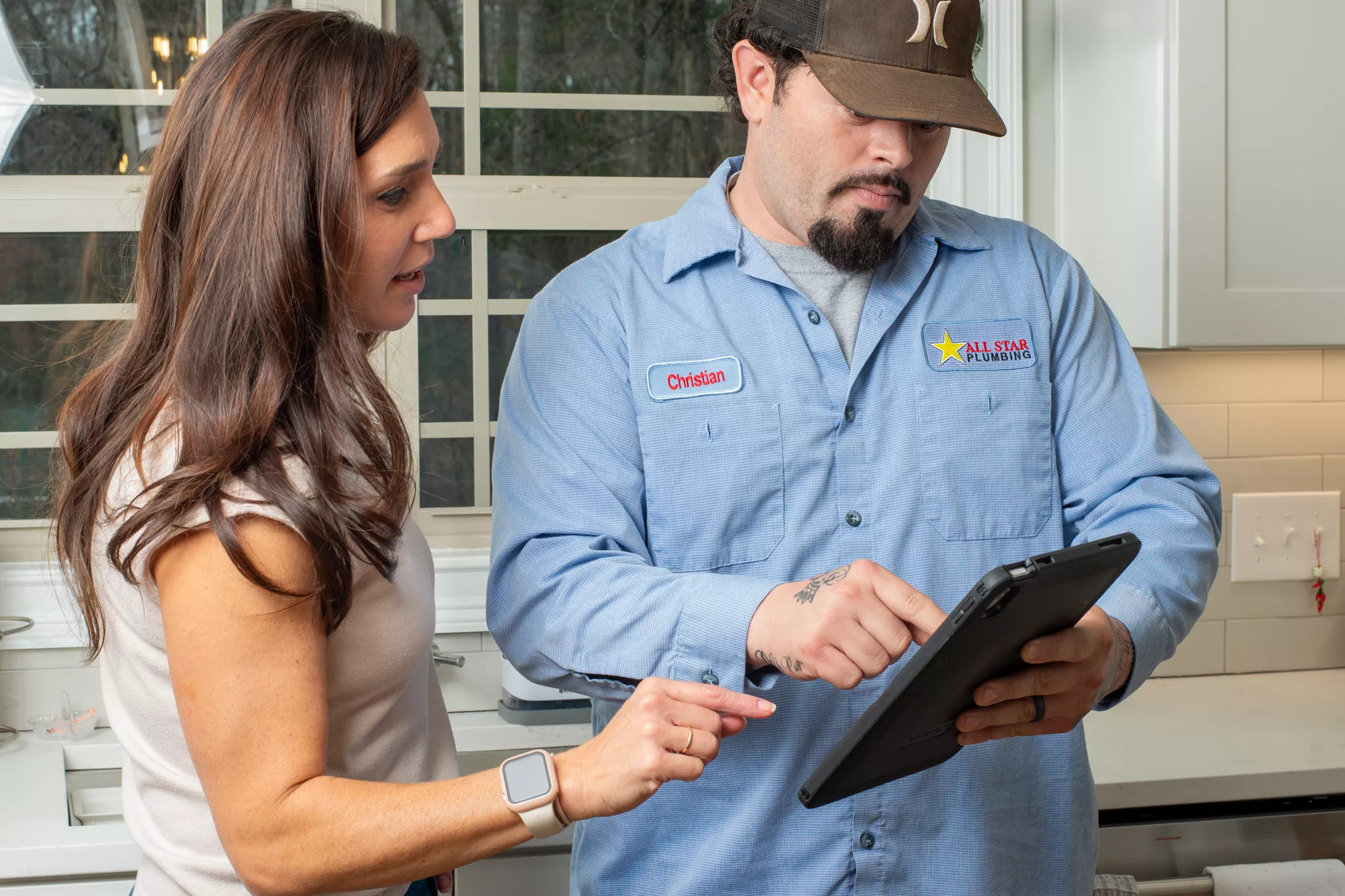
Every pipe in your home has a lifespan. Copper lasts 50-70 years. Galvanized steel corrodes in 20-50 years. PVC can last 50+ years but can crack. When pipes fail — leaking, bursting, corroding, or breaking — you need someone who can find the problem and fix it right.
All-Star Plumbing repairs and replaces pipes throughout High Point, Greensboro, Winston-Salem, and the Triad. Water supply lines, drain pipes, sewer lines, gas pipes — we work on all of them. From a small leak repair to full repiping, we handle pipe problems of every size.
According to the American Society of Civil Engineers, much of America’s water infrastructure is aging, with some pipes in service for 50-100+ years. Residential plumbing faces the same reality — older pipes eventually need repair or replacement.
Signs Your Pipes Need Repair or Replacement
Pipes often fail gradually. Know the warning signs.
Visible Leak or Water Damage
- What it means: Pipe is cracked, corroded through, or has a failed connection.
- Urgency: High. Even small leaks cause significant damage over time.
Water Bill Increased Unexpectedly
- What it means: Water is escaping somewhere — possibly an underground or hidden leak.
- What to do: Leak detection to find the source, then repair.
Low Water Pressure
- What it means: Could be corroded pipes restricting flow, leak reducing pressure, or mineral buildup inside pipes.
- Common in: Homes with galvanized steel pipes — they corrode from inside out.
Discolored Water
- What it means: Rust or corrosion inside pipes. Brown or orange water typically indicates corroding iron or steel pipes.
- Urgency: Pipes are deteriorating and will eventually fail.
Frequent Leaks
- What it means: If you're fixing leaks repeatedly, the entire pipe system is aging out. Spot repairs become less cost-effective than replacement.
Wet Spots in Yard
- What it means: Underground water line or sewer line is leaking. Water is saturating the soil.
- What to do: Locate and repair the underground leak.
Banging or Hammering Pipes
- What it means: Water hammer — pressure surges causing pipes to move and bang. Can damage pipes and connections over time.
- What to do: Install water hammer arrestors, secure loose pipes.
Old Home with Original Pipes
- What it means: Pipes have a lifespan. Galvanized (20-50 years), copper (50-70 years), cast iron drain pipes (50-100 years). Original pipes in older homes may be nearing end of life.
- Recommendation: Inspection to assess condition before emergency failure.
Pipes We Work On
We repair and replace all types of residential and commercial pipes.
Water Supply Lines
The pipes that bring water into your home and distribute it to fixtures. Includes main water line from street and all interior supply piping.
Drain and Waste Pipes
Pipes that carry wastewater from fixtures to the sewer or septic. Includes all drain lines and the main sewer line.
The main line carrying all waste from your home to the municipal sewer or septic tank.
Common problems: Root intrusion, collapse, offset joints, bellies, cracks.
Pipes carrying natural gas or propane to appliances — water heaters, stoves, dryers, furnaces.
Common problems: Leaks at fittings, corrosion, damaged connections.
Underground Water Lines
The water main from the street to your house, and any other buried water lines on your property.
Exposed and Accessible Pipes
Pipes in basements, crawl spaces, utility rooms — anywhere we can access without opening walls.
Pipe Materials — What's in Your Home?
Different materials have different lifespans and issues.
- Copper
Issues: Pinhole leaks from corrosion (especially in acidic water), joint failures, freeze damage.
- PEX
- Galvanized Steel
- PVC / CPVC
- Cast Iron
- Clay / Orangeburg
Issues: Root intrusion at joints, collapse, deterioration. If you have these, replacement is typically recommended.
Pipe Repair Options
Different situations call for different approaches.
- Spot Repair
Fix a specific section — patch a leak, replace a damaged fitting, repair one cracked area.
Best for: Localized damage in otherwise good pipes.
Advantage: Lower cost, minimal disruption.
- Section Replacement
Replace a portion of the pipe — a corroded section, damaged run, or problematic area.
Best for: When damage is contained to one area but too extensive for spot repair.
- Full Repiping
Replace all water supply pipes or all drain pipes in the home.
Best for: Old galvanized pipes, severely corroded systems, frequent leaks throughout, or when spot repairs are no longer cost-effective.
What’s involved: Significant work, but solves problems permanently. Modern PEX repiping is less invasive than traditional methods.
- Trenchless Repair (Sewer/Drain)
Repair or replace underground pipes with minimal digging — pipe lining or pipe bursting.
Best for: Sewer line repair when you want to minimize yard damage.
Advantage: Less excavation, faster completion.
how can we help?

Related Services
Emergency Plumbing
24/7 emergency plumber service for leaks, backups, and sudden plumbing failures.
Water Heaters
Installation, repair, and maintenance for tank and tankless water heaters.
Repiping
Water lines, sewer lines, gas pipes, underground pipe repair
Leak Detection & Repair
Find and fix water leaks, slab leaks, pipe leaks
Drains & Sewer
Drain cleaning, sewer inspections, and water or sewer main repairs done efficiently.
Commercial
Business & industrial plumbing, backflow testing, excavation through High Point and the Triad.
Remodels
Plumbing upgrades and renovations for kitchens, bathrooms, and whole-home remodels.
Emergency Plumbing
24/7 emergency plumber service for leaks, backups, and sudden plumbing failures.
Water Heaters
Installation, repair, and maintenance for tank and tankless water heaters.
Repiping
Water lines, sewer lines, gas pipes, underground pipe repair
Leak Detection & Repair
Find and fix water leaks, slab leaks, pipe leaks
Drains & Sewer
Drain cleaning, sewer inspections, and water or sewer main repairs done efficiently.
Commercial
Business & industrial plumbing, backflow testing, excavation through High Point and the Triad.
Remodels
Plumbing upgrades and renovations for kitchens, bathrooms, and whole-home remodels.

Your Plumbing Problem, Solved in 3 Simple Steps!

Call and speak with a real person
No automated systems or call centers. When you call All-Star Plumbing, a real person answers 24/7, listens to the issue, and schedules help right away so you’re never waiting.

Get Clear Pricing Before Starting
Before any work begins, we explain the problem, walk you through your options, and give clear upfront pricing. You know the cost before we start, no surprises and no pressure.

We Fix the Problem
Our licensed plumbers arrive prepared to fix the issue correctly the first time. If we can’t fix it, you don’t pay. Simple, honest, and backed by our guarantee.

Call and speak with a real person
No automated systems or call centers. When you call All-Star Plumbing, a real person answers 24/7, listens to the issue, and schedules help right away so you’re never waiting.
Get Clear Pricing Before Starting
Before any work begins, we explain the problem, walk you through your options, and give clear upfront pricing. You know the cost before we start, no surprises and no pressure.
We Fix the Problem
Our licensed plumbers arrive prepared to fix the issue correctly the first time. If we can’t fix it, you don’t pay. Simple, honest, and backed by our guarantee.
Helpful Plumbing Tips From Local Experts
Our blog shares clear advice homeowners can use right away.


Locations and Areas Served
Plumber Service Company Serving the Entire Triad
Pipe Repair Questions
How much does pipe repair cost?
It varies widely. Simple leak repair may be $150-$400. Section replacement runs higher. Full repiping can be $4,000-$15,000+ depending on home size and access. We quote after assessment.
How do I know if I need repiping?
Signs include: frequent leaks, low pressure throughout, discolored water, galvanized pipes, or pipes over 50 years old. We can inspect and advise.
How long does repiping take?
Most whole-house repiping takes 2-5 days depending on home size and complexity. You’ll have water restored each day.
Do you have to tear up my walls?
Some access is needed, but we minimize damage. PEX repiping requires less access than traditional methods. We discuss access requirements before starting.
Should I replace galvanized pipes?
If you have galvanized supply pipes and they’re causing problems (low pressure, discolored water, leaks), replacement is usually the best long-term solution.
What type of pipe do you install?
For water supply, we typically use PEX (flexible, durable, freeze-resistant) or copper depending on situation and preference. For drains, PVC. For gas, black iron or CSST.
Can you repair underground pipes?
Yes. We locate underground leaks and repair them — either by excavation or trenchless methods depending on the situation.