Skip to content














For most people, calling a plumber is rare enough to feel a little stressful. You do not know how long the job will take, what it will cost, or what you should do to get ready. That uncertainty is where the anxiety comes from, not the repair itself.
The good news is that a professional plumbing repair follows a clear, predictable path from the first phone call to the final invoice. This guide walks you through each stage so you know exactly what is happening and why. At All-Star Plumbing, a real person answers the phone 24/7 and guides homeowners across High Point and the Triad through the whole process without the guesswork.
Why Knowing the Process Helps
A plumbing problem already feels like a loss of control, and not knowing what comes next only adds to the stress. When you understand the steps ahead of time, you can ask better questions and spot when something feels off.
It also protects your wallet. A homeowner who knows the process is far less likely to be talked into unnecessary work or blindsided by a bill, because they know what a fair, honest repair actually looks like.

Before the Plumber Arrives
The visit starts on the phone, and a few minutes of prep makes everything smoother. When you call, describe the problem as clearly as you can, including when it started and whether it is getting worse. The more detail the plumber has, the faster they can pinpoint the issue once they arrive.
While you wait, get the space ready so the plumber can work right away. A quick checklist:
- Describe the problem and its history clearly on the call
- Clear a path to the affected sink, toilet, or water heater
- Locate your main water shut-off valve in case it is needed
- Move valuables, rugs, and pets away from the work area
All-Star Plumbing schedules through a real person rather than a call center, so the details you share on the phone actually reach the technician heading your way.
Step 1: Diagnosis and Inspection
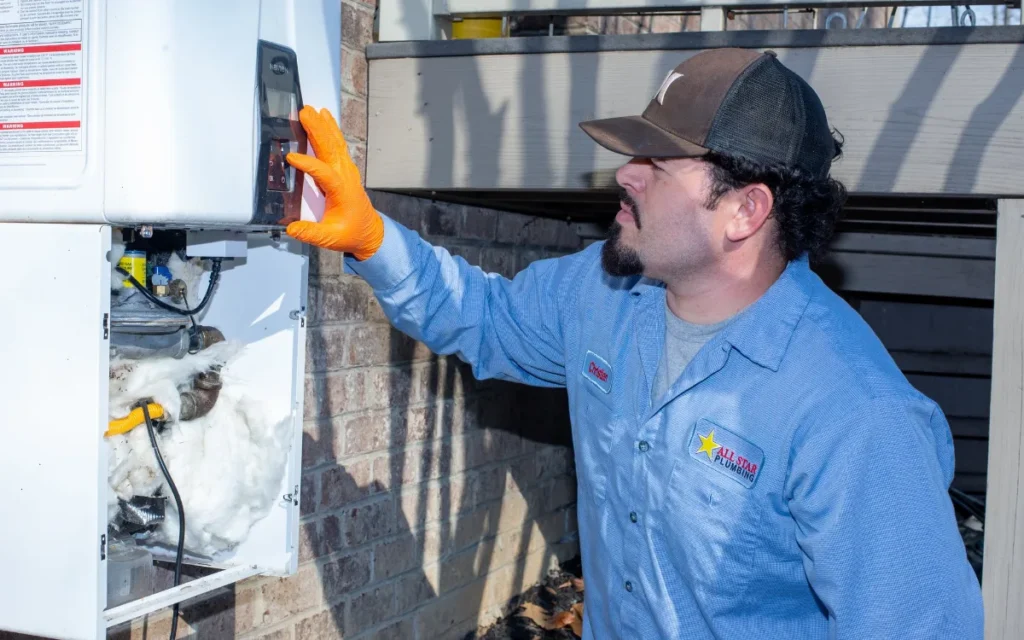
The first thing a good plumber does on site is look, not fix. They inspect the affected area, ask about what you have noticed, and often use tools to see what is hidden. For drains and sewer lines, that can mean a camera inspection, while leak detection may involve acoustic sensors or moisture meters.
The goal is to find the real cause, not just the symptom. A slow drain might point to a deep clog, and a wet ceiling might trace back to a pipe several feet away. Getting the diagnosis right the first time is what keeps the same problem from coming back a month later, and it is the reason a rushed plumber who skips the inspection is a warning sign.
Step 2: The Estimate and Upfront Pricing
Once the plumber knows what is wrong, they should explain it in plain terms and give you a clear price before touching a wrench. A solid estimate lays out the cost of labor and parts, the expected timeframe, and your options if there is more than one way to fix it.
This is also where the repair-versus-replace conversation happens. An honest plumber will tell you when a repair makes sense and when replacement is the smarter long-term call, backed by what they actually found. With All-Star Plumbing, you approve the price before any work begins, there are no surprises added at the end, and we offer free second opinions on major jobs like sewer and water line replacements.
Step 3: The Repair Itself
With the price approved, the actual work begins. The plumber shuts off water to the affected line, makes the repair, and tests as they go. Simple jobs are quick, while bigger ones take longer and may require reaching pipes behind a wall or in a crawl space.
Here are rough timeframes for common repairs:
- A leaky faucet or simple pipe fix: under an hour to a couple of hours
- A water heater replacement: a few hours
- A sewer or water main repair: often a full day, depending on access
- A whole-home repipe: typically one to three days
Throughout the work, a professional protects your home with drop cloths and keeps the area contained. If reaching the problem means cutting an access point, a good plumber makes the cut as small and clean as possible.

Step 4: Testing and Cleanup
When the repair is done, the plumber tests the fix before packing up. They run water, check for leaks, and confirm everything works the way it should. This is the moment to watch, ask questions, and make sure you understand what was done.
After testing, a professional cleans the work area and leaves it as tidy as they found it. They should also walk you through any short-term care, like waiting a few hours before running very hot water through a freshly repaired line. If the fix involved a fixture or appliance, ask for a quick demonstration so you are comfortable using it before the plumber leaves.
Step 5: The Invoice and Warranty
The last step is the paperwork. You receive an itemized invoice showing the labor and parts, so you can see exactly what you paid for. Keep this document, along with any warranty details on parts and workmanship, in case a question comes up later.
A trustworthy company stands behind its work. All-Star Plumbing backs every repair with a simple promise: if we cannot fix it, you do not pay. That guarantee is your assurance that the job was done right.
How to Be a Good Partner During the Repair
The repair goes best when you and the plumber work as a team. You do not need to hover, but staying reachable and involved helps the whole visit run smoothly and keeps you in control of decisions.
A few simple things make you a good partner in the process:
- Ask the plumber to explain the problem and fix in plain terms
- Approve any change in scope or price before it happens
- Keep kids and pets clear of the work area for safety
- Save your invoice and warranty information
None of this slows the job down. Good plumbers welcome questions because a homeowner who understands the work is a homeowner who trusts the result.

Questions Worth Asking Your Plumber
Knowing what to ask puts you on solid footing, especially for a bigger repair. These questions get you the information that matters most and are ones any honest plumber will expect:
- Is this a repair, or does it really need a full replacement?
- What caused the problem, and how do I prevent it from returning?
- Is this price all-in, or could it change once you get started?
- What warranty comes with the parts and the labor?
A confident, honest plumber answers all of these without hesitation. If you get vague replies or feel rushed, that tells you something about who you are dealing with.
A Plumbing Repair Done Right in High Point
A good plumbing repair is more than a working faucet. It is a clear process where you understand the problem, approve the price upfront, and walk away knowing what happened and how to avoid a repeat. That transparency is the difference between a stressful visit and an easy one.
That is the standard All-Star Plumbing was built on. A real person answers 24/7, our licensed team gives you upfront pricing, and every job is backed by our guarantee. If you need a plumbing repair anywhere in High Point, Greensboro, Winston-Salem, Kernersville, or the Triad, call us at (336) 462-1080.