Skip to content













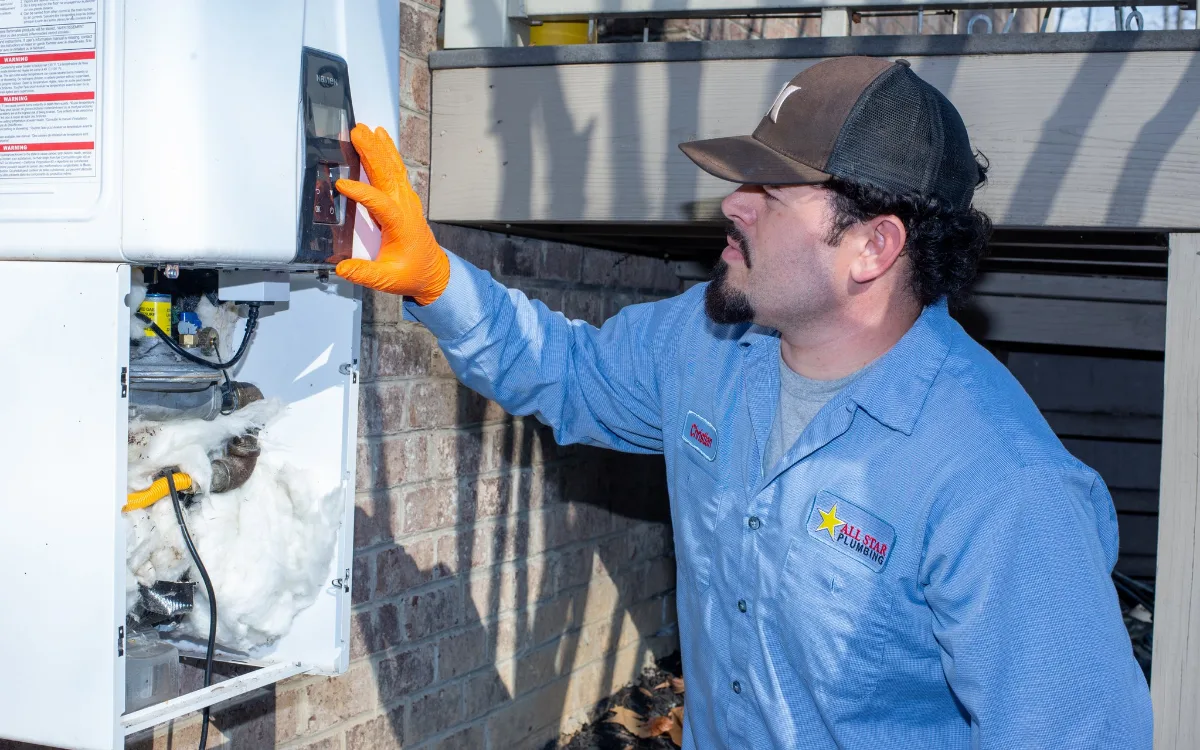
Water heater maintenance means one annual visit: flush the tank, test the temperature and pressure relief valve, inspect the anode rod, check the thermostat setting and look for early leaks. Done every year, it commonly adds three to five years of tank life. Skipped, sediment cooks the bottom of the tank until it fails. Our water heater maintenance service covers the Triad.
Key Takeaways
- Flush the tank once a year. Twice a year on well water or if your water is hard.
- The anode rod is the part that saves the tank. Check it at three years, then every two years after.
- Water heating is about 18% of home energy use, so a sediment-packed tank shows up on the power bill.
- 120 degrees is the target thermostat setting for most households.
- Past ten years, flushing carries risk. Loosened scale can expose a hole that was already there.

Why Water Heater Maintenance Matters More Than People Think
A water heater is the appliance most homeowners think about exactly once, on the day it floods the garage. Until then it sits in a closet doing its job quietly, which is precisely why it gets ignored.
Inside that tank, minerals drop out of the water and settle on the bottom as sediment. On a gas unit the burner then has to heat through that layer, so the steel gets hotter than it was designed to get. On an electric unit the sediment buries the lower element and burns it out.
According to the Department of Energy, water heating energy use makes up about 18% of a home’s total energy use, and is typically the second largest energy expense in the house. Sediment makes that number worse every year it stays in the tank.
What a Neglected Tank Actually Costs
The failure mode is rarely dramatic at first. You get less hot water than you used to. Showers run cool sooner. There is a popping or rumbling sound when the burner fires, which is water flashing to steam underneath the sediment layer.
Then the tank splits. A 50 gallon tank empties onto the floor, and the EPA notes through its household water leaks program that leaks in the average home waste nearly 10,000 gallons of water a year even before anything bursts.
The Annual Water Heater Maintenance Checklist
This is the full list, in the order we work through it. Items one through four are reasonable for a confident homeowner. Items five and six involve gas, electricity or the pressure vessel itself.
- Check the area around the unit. Look for rust streaks, damp concrete, corrosion at the fittings and anything stored against the tank.
- Confirm the thermostat setting. 120 degrees serves most households and reduces scald risk and standby loss.
- Test the temperature and pressure relief valve. Lift the lever, let water discharge into the drain line, release it. If it drips afterward or nothing comes out, the valve needs replacing.
- Flush the tank. Shut off power or set gas to pilot, run a hose from the drain valve, and empty until the water runs clear.
- Inspect the anode rod. Pull it and look. Heavy pitting or a bare steel core means replace it now.
- Check the burner, venting and combustion air on gas units, or the elements and wiring on electric units.
If any of that turns up a problem, our water heater repair and replacement team can quote the fix before touching anything. Call (336) 462-1080 and you get a real person, not a call center.
How Often Should a Water Heater Be Flushed in the Triad?
Once a year on city water in High Point, Greensboro or Winston-Salem. Twice a year if your home runs on a private well, and twice a year if you already see white scale on faucets and shower glass.
Water in the Piedmont is not the hardest in the country, but it is hard enough to matter over a decade. Rural properties in Stokesdale, Wallburg, Advance and Oak Ridge that draw from wells often see far more mineral load, and those tanks fill with sediment much faster.
If you are not sure which category you are in, a hard water test settles it in one visit. The result also tells you whether a softener would pay for itself in appliance life.
Tank Versus Tankless Maintenance
| Task | Tank Water Heater | Tankless Water Heater |
|---|---|---|
| Flush or descale | Drain and flush yearly | Vinegar or solution descale yearly |
| Anode rod | Inspect at 3 years, then every 2 | Not applicable on most units |
| Filter cleaning | Not applicable | Inlet screen every 6 months |
| Relief valve test | Yearly | Yearly |
| Typical service life | 8 to 12 years | 15 to 20 years with upkeep |
| Cost of skipping it | Tank failure and flooding | Scale lockout and error codes |
Tankless units fail differently. They do not flood a garage, they simply stop producing hot water and throw an error code while scale coats the heat exchanger. Our tankless water heater service handles descaling for Navien, Rinnai and the other major brands we are certified on.
What a Yearly Service Visit Looks Like in Practice
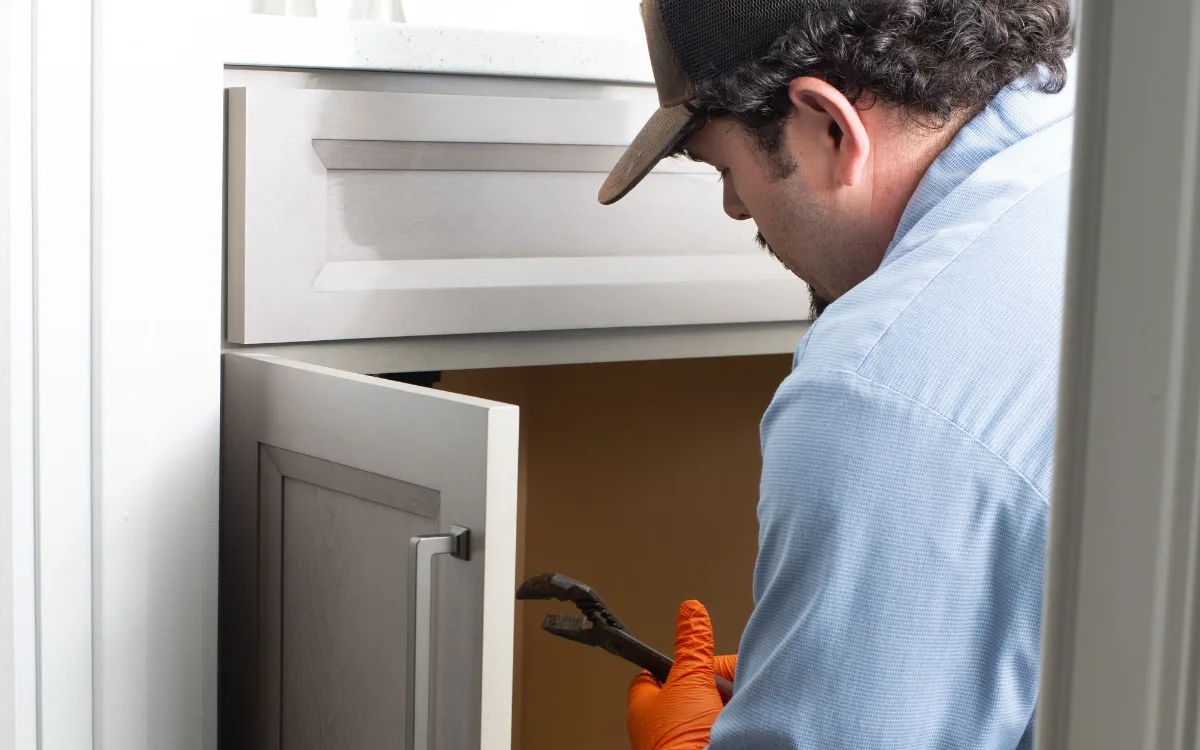
Most homeowners have never watched a water heater service, so it feels like a mystery line item. It is not complicated, and knowing the steps makes it easier to tell a real service from a quick upsell.
A proper visit starts with the unit off and cooling, because draining a tank at 140 degrees is how people get hurt. While it cools, the plumber reads the data plate for the manufacture date, capacity and fuel type, then checks the expansion tank, the shutoff and the drain pan.
The flush itself takes twenty to forty minutes depending on how much sediment comes out. The anode rod is the slow part, because a rod that has been in place for eight years usually needs an impact wrench and a second person bracing the tank.
At the end you should get told three things: the age of the unit, the condition of the anode rod, and an honest read on how many years are realistically left. If a plumber cannot tell you the age of your heater, they did not look at the label.
When You Should Not Flush a Water Heater
This part gets left out of most checklists, and it matters. Flushing an old, never-maintained tank can turn a working heater into a leaking one the same afternoon.
Here is why. In a tank that has never been drained, sediment and corrosion have packed against thin spots in the steel. That packed layer is partly what is holding the water in. Flush it out and the hole underneath becomes obvious.
Think twice before flushing if any of these apply:
- The tank is over ten years old and has never been flushed.
- The drain valve is plastic and visibly brittle.
- There is already rust weeping at the base or at a fitting.
- The relief valve has been discharging on its own.
None of that means leave it alone. It means have a plumber do it, with a plan and a replacement unit priced in advance, so a bad outcome is an inconvenience rather than a flood.
Water Heater Maintenance Questions We Get Asked
What happens if you never flush your water heater?
Sediment builds into a solid layer on the tank floor. Recovery slows, the burner or lower element works harder, the steel overheats and corrodes from the inside, and the tank typically fails years earlier than it should. You usually hear rumbling or popping before it goes.
Can I flush my water heater myself?
Yes, on a tank under about eight years old that has been maintained. Shut off the power or set gas to pilot, let the water cool, connect a hose to the drain valve, open a hot tap upstairs to break the vacuum, and drain until clear. Stop if the drain valve will not reseal.
How much does a professional water heater flush cost?
It varies by unit type, access and whether anything needs replacing while we are there. We quote the price before starting, and if you decide against the work, there is no charge. Give us the age and brand of your unit on the phone and we can give you a range.
Should I flush a seven year old water heater?
Yes, if it has been flushed before. If it has never been touched in seven years, it is a judgement call. Have someone look at the condition of the drain valve and the base of the tank first, because a stuck or brittle valve is the thing most likely to go wrong.
How long should a water heater last?
Eight to twelve years for a tank unit, and fifteen to twenty for a tankless one. Annual maintenance pushes both numbers toward the top of the range. Hard water, high thermostat settings and no anode rod replacement push them toward the bottom.
Book Your Water Heater Tune-Up Before Winter
The worst week to discover your water heater is finished is the first cold snap of the year, when every plumber in the Triad is already booked. A yearly service visit in autumn is the simplest way to avoid that.
Call All Star Plumbing at (336) 462-1080 to get your tank flushed, your anode rod checked and your relief valve tested. A real person answers 24 hours a day, you get upfront pricing before any work begins, and if we cannot fix it you do not pay. You can also book a water heater tune-up online.
Family owned in High Point since 2007, licensed, bonded and insured, and certified on AO Smith, Rheem, Bradford White, State, Navien and Rinnai.
All Star Plumbing
4003 North Main Street
High Point, NC 27265
Phone: (336) 462-1080
Hours: Open 24 hours, 7 days a week
NC Plumbing License #15130
Find us on Google Maps