Skip to content













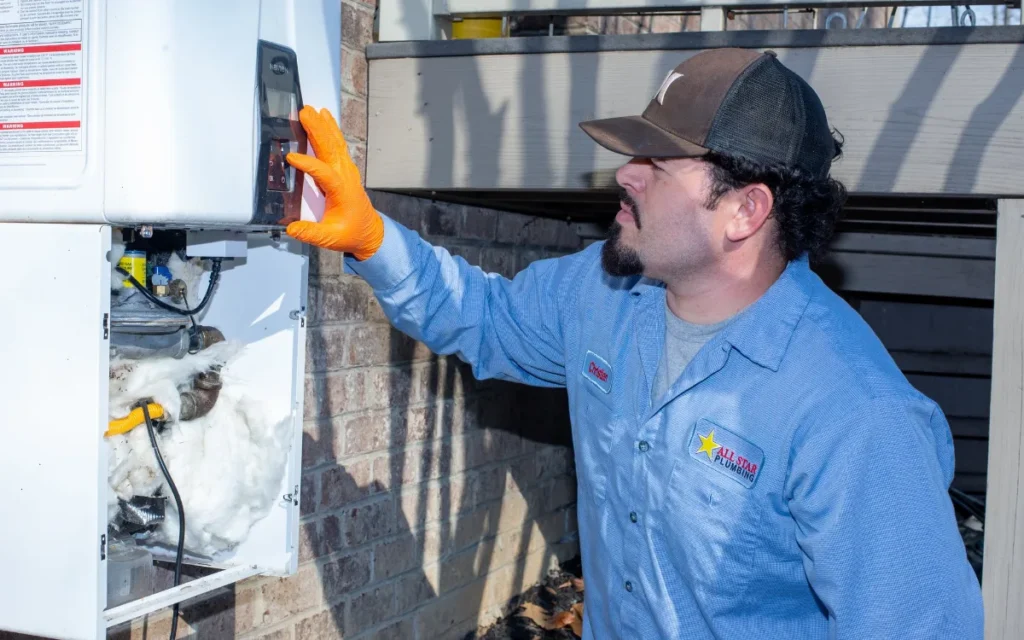
Most water heaters do not quit all at once. They warn you for weeks or months first, and the signs your water heater is failing are easy to miss if you do not know what to listen and look for. A tank that rumbles, water that runs rusty, or a heater that cannot keep up with two showers is telling you the end is close. This guide walks through the warning signs our High Point plumbers see most, what each one usually means, and when a repair still makes sense instead of a replacement.
Key Takeaways
- Age is the strongest single clue. A standard tank lasts 8 to 12 years and a tankless unit 15 to 20.
- Rusty hot water, popping noises and a damp floor are the three signs that most often end in replacement.
- Sediment causes most noise complaints and most early failures, and hard water in the Triad makes it worse.
- A leaking tank body cannot be repaired. A leaking valve or fitting usually can.
- Replacing a heater before it bursts costs far less than replacing it plus the flooring and drywall around it.
1. The Heater Is Past Its Expected Age
Pull the rating plate on the side of the tank and find the serial number. Most manufacturers code the month and year of manufacture into the first four characters. A gas or electric tank past ten years is living on borrowed time, and one past twelve is a replacement waiting for a bad day. Tankless units run much longer, often 15 to 20 years, because the heat exchanger can be descaled and most parts are serviceable.
Age on its own is not a reason to replace a unit that works well. Age plus any other sign on this list is. If you are already weighing your options, our guide to tank versus tankless conversions covers what the switch actually involves in a Triad home.
2. The Hot Water Runs Rusty or Smells Like Metal
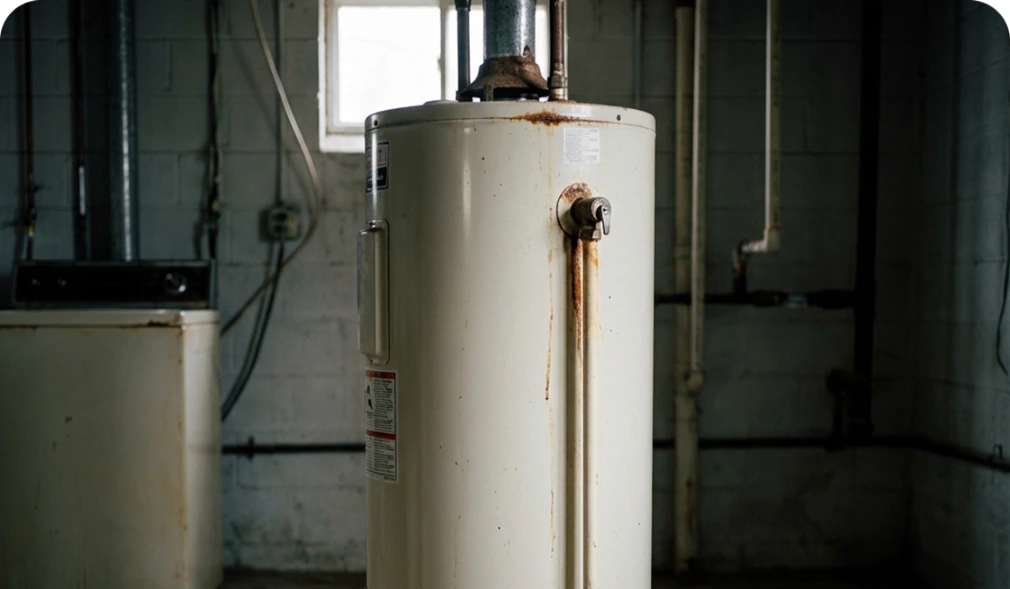
Brown, orange or rust-tinted hot water almost always means the inside of the tank is corroding. Every tank has a sacrificial anode rod that is designed to rust so the steel tank does not. Once that rod is eaten away, the tank lining goes next, and a rusted tank leaks sooner rather than later.
Run the cold tap first to rule out the supply line. If only the hot side is discolored, the heater is the source. Replacing the anode rod on a tank under six years old can add years of life. On an older tank the corrosion is usually too far along, and a water heater replacement in High Point is the honest answer.
3. You Hear Popping, Rumbling or Crackling
Those sounds are water flashing to steam underneath a layer of hardened sediment on the tank floor. The burner has to fire through that crust, so the steel above it overheats and the tank works harder for the same amount of hot water. Sediment is the leading cause of early tank failure, and homes on hard water build it faster.
An annual flush clears loose sediment before it hardens. Once the deposits have baked on, flushing does little. Our breakdown of what each water heater sound means goes through the noises one by one, and a hard water test tells you whether scale is the root problem in your home.
4. Hot Water Runs Out Faster Than It Used To
If a shower that used to last fifteen minutes now goes cold in six, something changed inside the tank. Sediment takes up volume that used to hold water. On an electric unit, a burned out lower heating element leaves only the top element working, which heats roughly the upper third of the tank. On a gas unit, a failing thermostat or a dirty burner has the same effect.
A broken dip tube causes the same complaint. The dip tube carries cold water to the bottom of the tank, and when it cracks, cold water dumps straight into the hot outlet and mixes with your supply. Any of these are repairable, so a sudden drop in capacity is worth a service call before you shop for a new heater.
5. There Is Water Around the Base of the Tank
Not every puddle means the tank has failed. Check the temperature and pressure relief valve, the drain valve at the bottom, and the hot and cold connections on top. A dripping valve or a weeping fitting is a straightforward repair. Condensation on a gas unit during a cold snap is normal and dries on its own.
What cannot be fixed is a leak from the tank body itself. Once the steel has rusted through, the tank is done, and it will get worse without warning. If you find water on the floor and no obvious valve behind it, shut off the water supply and the power or gas to the heater and call for emergency plumbing help before the seam opens up.
6. The Pilot Keeps Going Out or the Breaker Keeps Tripping
A gas pilot that will not stay lit usually points at a failing thermocouple, a dirty pilot assembly or a venting problem. The thermocouple is inexpensive and quick to replace. A venting problem is a safety issue, because a heater that cannot draft properly can spill combustion gases into the house.
On the electric side, a breaker that trips every few weeks often means a heating element has shorted against the tank or the thermostat has failed closed. Neither should be reset repeatedly and ignored. Repeated tripping is the electrical system telling you something inside the heater is wrong.
7. Your Energy Bill Climbed With No Change in Habits
Water heating is one of the largest energy loads in a typical home, second only to heating and cooling. A tank fighting through sediment, a failing element, or a thermostat stuck too high burns more fuel for the same result, and that shows up on the bill before it shows up at the tap.
Before you blame the heater, check the thermostat setting. Most households are comfortable at 120 degrees, and every ten degrees above that adds cost and scalding risk. The ENERGY STAR water heater guide explains the efficiency ratings worth comparing if you do end up shopping. Our own post on making a water heater more efficient covers the cheap fixes first.
Repair or Replace: How to Decide
The simple rule our technicians use is the cost of the repair against the age of the unit. If the repair costs more than half the price of a new heater and the tank is past eight years old, replacement is the better spend. Under that, repair usually wins. Warranty status matters too, because many tanks carry a six to twelve year warranty on the tank itself.
The Consumer Product Safety Commission also publishes recall notices worth checking before you pay for a repair on an older unit. Repairs that are almost always worth doing include thermocouples, thermostats, heating elements, dip tubes, relief valves and anode rods. The one failure that ends the conversation is a rusted through tank. At that point you are choosing a new unit, not deciding whether to.
| Warning sign | Most common cause | Usual outcome |
|---|---|---|
| Rusty hot water | Anode rod spent, tank corroding | Replace on older tanks |
| Popping or rumbling | Hardened sediment on tank floor | Flush, or replace if severe |
| Hot water runs out early | Failed element, sediment or dip tube | Repairable in most cases |
| Water at the base | Valve, fitting or tank seam | Depends on the source |
| Pilot will not stay lit | Thermocouple or venting | Usually repairable |
| Breaker keeps tripping | Shorted element or thermostat | Usually repairable |
| Bill climbed with no change | Sediment or wrong thermostat setting | Service first, then decide |
Signs Your Water Heater Is Failing: Frequently Asked Questions
How long does a water heater last in North Carolina?
A standard tank water heater lasts 8 to 12 years and a tankless unit 15 to 20. Hard water shortens both, because scale builds on the tank floor or inside the heat exchanger. Annual flushing is the single best thing you can do to reach the top of that range.
Is a leaking water heater an emergency?
If the water is coming from the tank body, yes. Shut off the cold water supply valve above the heater, cut the power at the breaker or turn the gas control to off, and call a plumber. If the drip is clearly from a valve or a fitting, it is urgent but not an emergency.
Can a rusty water heater be fixed?
Rust coming from inside the tank cannot be reversed. On a unit under about six years old, replacing the anode rod can stop further corrosion and extend its life. On an older tank the lining is usually already compromised and replacement is the safer choice.
What are the first signs your water heater is failing?
Noise and a shorter hot water supply almost always come first. Rusty water, moisture at the base and a rising energy bill follow. If you notice two or more of these on a heater older than eight years, start planning a replacement rather than waiting for it to fail.
Should I repair or replace a ten year old water heater?
If the repair costs more than half the price of a new unit, replace it. At ten years the tank is near the end of its expected life, so putting several hundred dollars into it buys a short runway. Small repairs like a thermocouple or element are still worth doing.
Does flushing a water heater really help?
Yes, if you do it before sediment hardens. A yearly flush carries loose mineral out through the drain valve and keeps the burner or lower element working against water instead of a crust. On a tank that has never been flushed in ten years, it often does very little.
Water Heater Help Across High Point and the Triad
If your heater is showing any of these signs, our licensed plumbers can test it, tell you plainly whether it is a repair or a replacement, and give you the price before any work starts. All Star Plumbing of the Triad has served High Point, Greensboro, Winston-Salem and the surrounding towns since 2007. Call (336) 462-1080 or request a free estimate and we will get someone out to look at it.