Skip to content













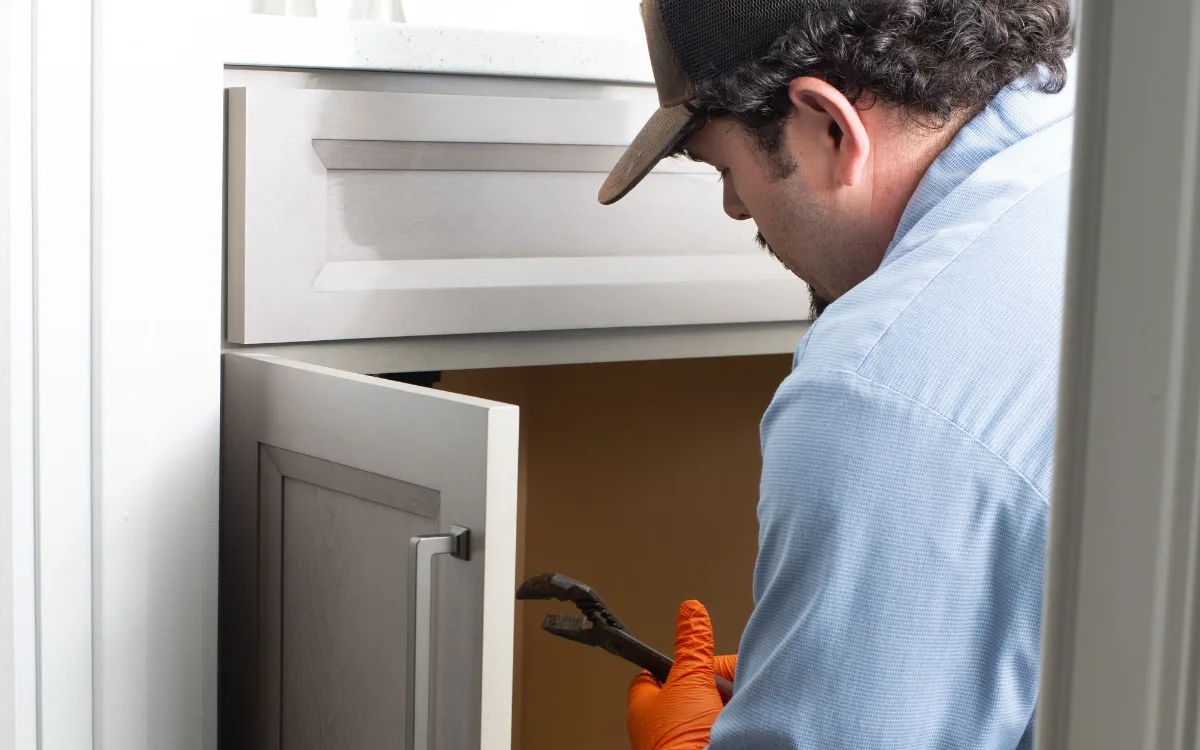
Sump pump maintenance is a bucket test every three months and a full service once a year. The annual service means unplugging the pump, lifting it out, clearing the pit, cleaning the inlet screen, checking the check valve and float, then refilling and watching it cycle. Most failures are a stuck float or a blocked discharge, not a dead motor. Our sump pump repair and replacement team covers the Triad.
Key Takeaways
- Test quarterly with a bucket of water. A pump that has not run in months is the one that fails in a storm.
- Full service once a year, ideally in late winter before the spring rain.
- The float is the usual culprit. Debris or a pit wall stops it rising and the pump never starts.
- Discharge at least 20 feet from the foundation, or the same water comes straight back.
- Most Triad homes pump from a crawlspace, not a basement, so failures go unnoticed for far longer.

Why Sump Pumps Fail in Triad Homes
Most homes around High Point, Greensboro and Winston-Salem sit on crawlspaces rather than full basements. That changes the problem in one important way: nobody goes down there.
A basement pump announces its failure. Water rises, carpet gets wet, somebody notices within hours. A crawlspace pump can fail in October and go undiscovered until a spring inspection finds standing water, rusted ductwork and mould on the subfloor.
Red clay soil makes it worse. Piedmont clay holds water rather than draining it, so the pit fills quickly during heavy rain and the fine clay particles that come with it settle in the pit and coat the pump.
The Four Failures We Find Most Often
- Stuck float switch. Debris, a tilted pump or a pit that is too narrow stops the float rising.
- Blocked or frozen discharge. The pump runs, the water has nowhere to go, the motor burns out.
- Failed check valve. Water drains back into the pit after each cycle, so the pump short-cycles itself to death.
- No power. A tripped GFCI or an unplugged pump after somebody used the outlet for something else.
Only one of those four is actually a broken pump. The rest are maintenance items, which is the whole argument for doing this once a year.
The Annual Sump Pump Maintenance Checklist
Set aside an hour. You need a bucket, a flashlight, gloves, an old towel and a wire brush.
- Cut the power. Unplug the pump and switch off the breaker. Do this before anything else touches the pit.
- Lift the pump out. Disconnect at the union above the check valve so you are not fighting the whole discharge pipe.
- Clean the inlet screen. A wire brush and a rinse. A screen half blocked with clay halves your flow rate.
- Clear the pit. Scoop out silt, gravel and anything that has fallen in. Sponge the last of it out.
- Check the check valve. The flapper should move freely and seal in one direction. Replace it if it is stiff or leaking at the joint.
- Inspect the float and cord. Look for cracks, a waterlogged float, frayed cord or corrosion on the plug.
- Reinstall and refill. Pour water in steadily until the float lifts. The pump should start promptly, clear the pit and shut off cleanly.
- Walk to the discharge point. Confirm water is actually coming out, and that it lands well away from the house.
That last step is the one people skip and it is the one that causes the most damage. A pump that works perfectly into a blocked pipe is still a flood waiting to happen.
Your Maintenance Schedule at a Glance
| How Often | What to Do | Takes |
|---|---|---|
| Every 3 months | Bucket test, confirm it starts and stops | 5 minutes |
| Every 3 months | Check the discharge outlet is clear | 2 minutes |
| Yearly | Full clean, check valve and float inspection | 1 hour |
| Every 2 to 3 years | Replace the battery on a backup pump | 20 minutes |
| Every 7 to 10 years | Plan for pump replacement | Budget item |
| After any heavy storm | Confirm the pit drained and the pump stopped | 2 minutes |
If a quarterly bucket test feels like a lot, tie it to something you already do. Change the HVAC filter, test the sump pump. Same trip, same season.
Where the Discharge Water Should Go
Discharge is a drainage problem, not just a plumbing one. Water dumped at the foundation soaks straight back into the clay and returns to the pit, so the pump runs constantly and wears out years early.
Aim for at least 20 feet from the foundation, onto ground that slopes away. Extension pipe is inexpensive and it is the highest-value thing you can do for a pump that runs too often. The EPA’s guidance on managing stormwater runoff covers where roof and ground water should be directed.
One thing to avoid: never tie a sump discharge into the sanitary sewer. It is against the rules in most Triad municipalities because it floods the treatment system during storms, and the High Point sewer system pages set out what the public main is there for.
What Not to Pour Into a Sump Pit
People ask what to pour in to clean it. The honest answer is water and a sponge. Almost everything else causes a problem.
- Bleach. Corrodes the impeller, the seals and the metal housing over time.
- Chemical drain cleaner. Same damage, plus it goes out into the yard.
- Vinegar in quantity. Fine for a rinse, but acidic water sitting on the pump is not.
- Oil or degreaser. Coats the float and stops it moving.
For odour, a rinse with plain water and a scrub of the pit walls solves almost every case. A persistent smell usually means the pit is collecting something it should not be, which is worth a look from a plumber.
Signs Your Sump Pump Is About to Fail
Pumps rarely die without warning. These are the signals worth acting on:
- Running constantly even when it has not rained, which usually means a failed check valve or a discharge that drains back.
- Short cycling, switching on and off every few seconds.
- Grinding, rattling or a loud hum with no water movement.
- Visible rust on the housing or a stained, corroded plug.
- Vibrating hard in the pit, which points at a bent impeller or shaft.
- Over ten years old and never serviced.
Sump Pump Maintenance Questions We Get Asked
Does a sump pump really require maintenance?
Yes. A sump pump sits in water and silt and is expected to start on demand after months of doing nothing. Quarterly testing and an annual clean catch the stuck floats, blocked screens and failed check valves that cause most flood calls.
What can I pour in my sump pump to clean it?
Plain water. Scrub the pit walls and the pump housing with a brush, rinse, and sponge the residue out. Bleach and chemical cleaners corrode the impeller and seals, and they end up discharged into your yard or the storm system.
What is the normal life expectancy of a sump pump?
Seven to ten years for a typical residential pump. A pump that runs constantly because of a poor discharge or a failed check valve can be finished in three or four. Maintenance is mostly about keeping it at the top of that range.
How often should I test my sump pump?
Every three months, and again before any forecast of sustained heavy rain. Pour water in until the float lifts, confirm the pump starts, clears the pit and shuts off on its own, then check the outside discharge is actually running.
Do I need a battery backup sump pump?
If the pump protects a finished space or a crawlspace with ductwork and insulation, yes. Storms that fill the pit are the same storms that take the power out, which is exactly when the primary pump stops. Backup batteries need replacing every two to three years.
Get Your Sump Pump Checked Before the Next Storm
The cheapest sump pump service is the one booked on a dry day. The expensive version is the emergency call at 2am with water already across the crawlspace.
Call All Star Plumbing at (336) 462-1080 and we will clean the pit, test the pump under load, check the valve and the discharge, and tell you honestly how many years are left in it. A real person answers 24 hours a day, you get upfront pricing before work starts, and if we cannot fix it you do not pay. You can also book a sump pump service online.
If water has already come in, our emergency flood plumber team responds around the clock. Homes on private wells should also look at well pump repair service, because the two pumps often get neglected together.
Family owned in High Point since 2007, licensed, bonded and insured, certified on Myers, Goulds, Grundfos and Liberty Pumps, and serving 22 communities across the Triad.
All Star Plumbing
4003 North Main Street
High Point, NC 27265
Phone: (336) 462-1080
Hours: Open 24 hours, 7 days a week
NC Plumbing License #15130
Find us on Google Maps