Skip to content













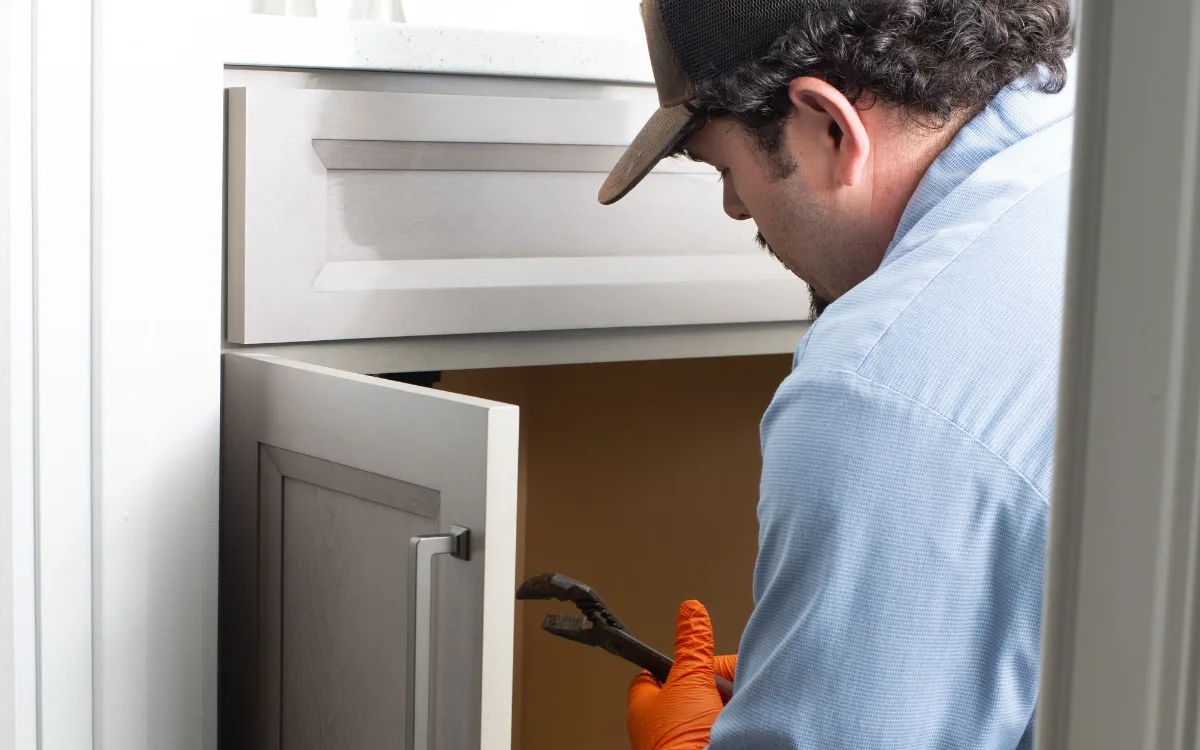
Most bathroom sink clogs are hair wrapped around the pop-up stopper, sitting six inches down the drain. Pull the stopper out and clean it, and the sink usually runs again. If that fails, a bent coat hanger, a wet vacuum or emptying the P-trap into a bucket will get the rest. Our drain cleaning service handles what stays put.
Key Takeaways
- Start with the stopper. It is the cause of most slow bathroom sinks, and it costs nothing to check.
- A wet vacuum beats every homemade mixture. Suction pulls the clog out instead of pushing it deeper.
- Baking soda and vinegar is mostly theatre. It smells clean and shifts very little hair.
- Block the overflow hole before you plunge, or the pressure goes there instead.
- Never use chemical drain cleaner on a sink you might have to open later.

First, Work Out Which Clog You Have
Two minutes here saves an hour of the wrong effort. The symptom tells you roughly where the blockage sits.
- Drains slowly but steadily means partial buildup near the top, almost always the stopper.
- Drains, then burps back means the P-trap under the sink is packed.
- Will not drain at all means a solid blockage in the trap or the branch line.
- Two fixtures affected at once means the problem is past both of them, and household fixes will not reach it.
That last one matters. If the bath gurgles when the sink drains, stop. Read our guide to plumbing vent basics, because that is a different problem.
Seven Fixes Using Things You Already Own
These are in the order we would actually try them, not in the order that makes for a longer article.
1. Pull and Clean the Pop-Up Stopper
Look under the sink at the back of the drain body. There is a small horizontal rod held by a clip, connected to the lift lever. Unclip it, slide the rod out, and the stopper lifts straight up.
What comes up with it is usually the entire problem: a grey mass of hair and soap. Clean it, refit the rod, test the sink. This alone fixes most slow bathroom sinks.
2. A Bent Wire Coat Hanger
Straighten a wire hanger and bend a small hook, about a quarter inch, into one end. Feed it down past the drain opening, turn it, and pull.
Go gently. A hanger scratches a plastic trap and can push a soft clog further along if you shove rather than hook.
3. A Wet and Dry Vacuum
This is the one homeowners forget and it outperforms everything else on this list. Set the vacuum to liquids, seal the hose over the drain with a rag or an old plunger head, block the overflow, and run it.
Suction pulls the clog up and out. Pushing, which is what every other method does, moves the problem down the pipe where it re-forms.
4. A Cup Plunger With the Overflow Blocked
Take the stopper out first. Run an inch of water. Stuff a wet rag firmly into the overflow hole near the rim and hold it there.
Seal the plunger over the drain, push gently once, then pump for 15 to 20 seconds. Skip the overflow step and most of your effort escapes through that hole.
5. Very Hot Tap Water and Dish Soap
Good on soap scum and light grease, useless on hair. Squeeze a generous amount of dish soap into the drain, wait ten minutes, then flush with the hottest water your tap produces.
Use tap hot, not boiling. Boiling water can soften PVC joints and crack a porcelain basin if it hits the surface.
6. Salt and Hot Water
Half a cup of table salt down the drain, followed by hot water, gives a mild abrasive scrub to the pipe walls. It is a maintenance trick more than a rescue, and it is worth doing monthly on a sink that keeps slowing.
7. Empty the P-Trap Into a Bucket
The last resort and the most effective. Put a bucket under the U-bend, loosen both slip nuts by hand, and lower the trap out.
Whatever was blocking the sink is now in the bucket. Rinse the trap, check the rubber washers are seated the right way round, hand tighten, then run water and watch for drips.

What Works and What Does Not
| Method | Works On | Effort | Honest Verdict |
|---|---|---|---|
| Clean the stopper | Hair and soap | 5 minutes | Fixes most cases |
| Wet vacuum | Hair, debris | 10 minutes | Best of the lot |
| Coat hanger | Hair near the top | 5 minutes | Good, be gentle |
| Plunger | Soft blockages | 10 minutes | Only with the overflow blocked |
| Hot water and soap | Grease, soap scum | 15 minutes | Useless on hair |
| Baking soda and vinegar | Odour | 30 minutes | Mostly a fizzing noise |
| Remove the P-trap | Almost anything | 20 minutes | Messy but it works |
The Baking Soda and Vinegar Question
It appears in every article on this topic, so it deserves a straight answer. The fizz is carbon dioxide from an acid meeting a base, and the reaction is over in seconds inside a pipe full of water.
It does not dissolve hair. It does very little to congealed soap. What it does well is deodorise a drain that smells, which is a real but different job.
If your sink is slow because of hair, the five minutes you spend on the stopper will do more than an hour of fizzing.
Why We Tell People to Skip Drain Cleaner
Chemical drain cleaner is the one thing on the shelf that can make your situation worse and more expensive at the same time.
It sits on top of the clog rather than clearing it, it generates heat that can distort plastic traps, it damages older metal pipe common in High Point and Winston-Salem homes, and it makes the sink hazardous for whoever opens the trap next. That person is usually you.
It also ends up in the municipal system. The High Point sewer system pages set out what the public main is designed to carry, and caustic drain products are not on the list.
Bathroom Sink Questions We Get Asked
What do plumbers use instead of drain cleaner?
Mechanical tools. A hand auger for the trap arm, a drain machine for the branch line, and hydro jetting for grease in a main. We clear the blockage physically rather than trying to dissolve it, which is faster and does not damage the pipe.
Does dish soap unclog drains?
It helps with grease and soap scum, especially with hot water behind it. It does nothing for hair, which is what blocks most bathroom sinks. Use it as a follow-up after clearing the stopper, not as the main attempt.
How do I fix a slow draining bathroom sink?
Pull the pop-up stopper first. Unclip the pivot rod at the back of the drain body, lift the stopper out, clean the hair off it, refit it and test. That single step clears the majority of slow bathroom sinks with no tools and no chemicals.
Why does my bathroom sink keep clogging?
Hair and soap build a layer on the stopper and trap walls a little at a time, so it comes back on a schedule. A monthly stopper clean and a hair catcher in the drain prevents most of it. Repeated clogging in several fixtures is a different problem and needs looking at.
Can boiling water damage my pipes?
It can. Boiling water softens PVC joints and glue, and poured onto cold porcelain it can crack a basin. Very hot tap water gets almost the same result on grease and soap without the risk.
When a Slow Sink Is Worth a Phone Call
Call someone if the sink backs up again within days of clearing it, if more than one fixture is slow, if water appears in a different fixture when you run the sink, or if you can smell sewer gas. Those point past the trap and household tools cannot reach them.
Call All Star Plumbing at (336) 462-1080 and we will clear it and tell you what caused it, so it is not back next month. A real person answers 24 hours a day, you get upfront pricing before work starts, and if we cannot fix it you do not pay. You can also book a drain cleaning online.
If this keeps happening, our guide to why your drain keeps clogging covers the underlying causes. Leaking taps that drip into the same basin are covered by our faucet repair and replacement team, and the EPA’s notes on efficient bathroom faucets are useful if you are replacing one.
Family owned in High Point since 2007, licensed, bonded and insured, serving 22 communities across the Triad.
All Star Plumbing
4003 North Main Street
High Point, NC 27265
Phone: (336) 462-1080
Hours: Open 24 hours, 7 days a week
NC Plumbing License #15130
Find us on Google Maps