Skip to content













Water damage rarely starts with a dramatic burst. It starts with a supply line nobody has looked at in twelve years, a water heater quietly weeping at the base, or a toilet that has been running for a month. Learning how to prevent water damage in your home is mostly about knowing which parts fail, how often to check them, and which small repairs are worth doing before they become claims. Here is the practical version our High Point plumbers give customers.
Key Takeaways
- Braided steel supply lines under sinks and toilets are cheap and should be replaced every 5 to 8 years.
- Washing machine hoses and water heaters cause a large share of indoor water damage claims.
- Read your water meter with every tap closed. Movement means a leak somewhere.
- Know your main shutoff location and test that it actually closes once a year.
- A leak detected in week one costs a service call. The same leak in month six costs flooring and drywall.
Start With the Parts That Fail Most Often
Plumbers see the same failures again and again. Braided supply lines to faucets and toilets have a rubber core inside the steel braid, and that core hardens with age. Rubber washing machine hoses split at the crimp. Water heater tanks rust from the inside out. Toilet fill valves and flappers wear until they run constantly.
None of these are expensive to replace on a planned schedule. All of them are expensive to replace after they fail on a Saturday. Replacing every toilet and faucet supply line in an average house is a short job, and it removes the most common source of sudden indoor flooding.
Check Your Water Meter for Hidden Leaks
This is the simplest whole house leak test there is. Turn off every fixture and appliance that uses water, then look at the meter. Most meters have a small triangular or star shaped low flow indicator that spins with even a trickle. If it moves, water is going somewhere.
Do this twice a year and after any month where the bill jumps without explanation. The EPA guidance on household leaks is worth a read for the scale of the problem. If the meter moves and you cannot find the source, our leak detection service can locate it without opening walls at random.
Give the Water Heater Its Annual Hour
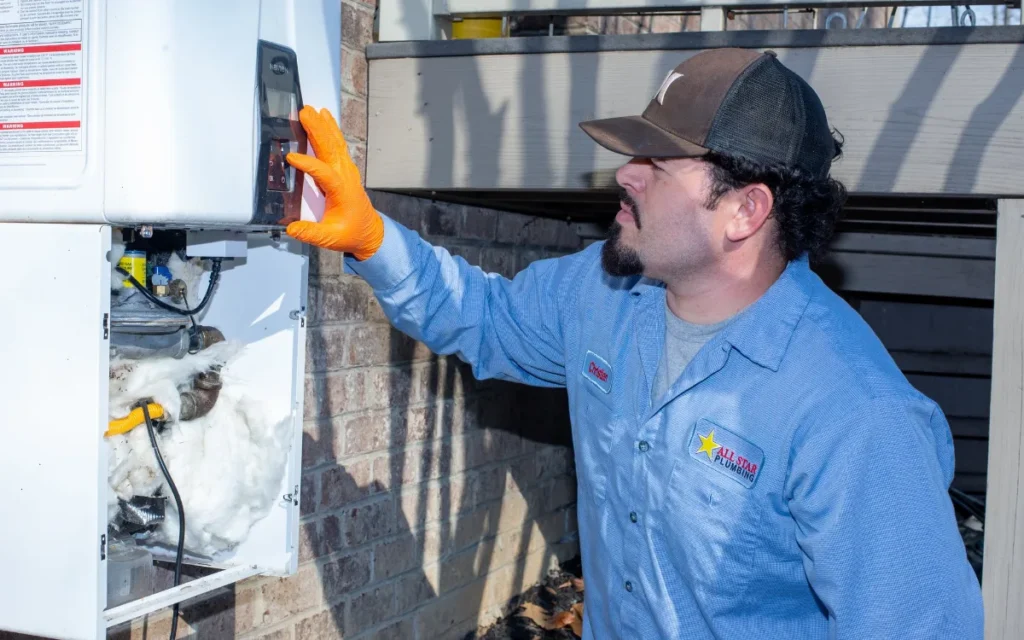
A water heater is a tank of hot water sitting in your house, usually above finished floors. When it fails, it does not drip politely. Flush it once a year to clear sediment, test the temperature and pressure relief valve, and look at the base for rust or moisture every few months.
If the heater sits over living space or finished flooring, a drain pan plumbed to a drain is inexpensive insurance. Our annual water heater maintenance checklist walks through the whole routine, and the warning signs are covered in our post on a water heater that is failing.
Deal With Running Toilets and Slow Drains Early
A running toilet wastes water continuously and, more importantly, tells you a valve or seal has failed. The same wear that lets water past the flapper eventually lets water past the tank bolts or the wax ring, and that leak goes into the subfloor rather than down the drain.
Slow drains matter for a different reason. A drain that backs up into a sink is an annoyance. A main line that backs up puts wastewater on the floor. If more than one fixture is slowing down, get a camera inspection before it becomes a cleanup job.
Protect Pipes Before the First Freeze
Frozen pipes cause some of the worst water damage in the Triad, because the break usually happens in a crawl space or an exterior wall where nobody sees it for hours. Insulate pipes in unheated areas, disconnect and drain garden hoses in the fall, and keep the thermostat steady during a hard freeze rather than setting it back overnight.
Outdoor spigots are a common failure point because water left in the line freezes and splits the pipe behind the wall. A frost proof hose bib solves it permanently, and outdoor spigot replacement is a quick job.
Know Where to Shut the Water Off
Every adult in the house should know where the main shutoff is and be able to close it. Test it once a year. Old gate valves seize in the open position, and finding that out during an emergency is a bad time to learn it. If yours will not turn, have it replaced with a quarter turn ball valve.
Fixture stops under sinks and behind toilets deserve the same check. Being able to isolate one fixture means a small leak does not mean shutting off water to the whole house while you wait for a plumber.
A Simple Schedule That Works
Most homeowners do not need a complicated plan. They need a short list they actually follow. Twice a year, read the meter with everything off and look under every sink with a flashlight. Once a year, flush the water heater, test the main shutoff and check the washing machine hoses. Every five to eight years, replace supply lines on fixtures.
The EPA water use statistics put the scale of household leaks in context if you want the numbers. Doing that costs a couple of hours and a handful of inexpensive parts. It catches the failures that turn into insurance claims, and it gives you a chance to spot the slow problems while they are still cheap.
| Part | Typical service life | How often to check |
|---|---|---|
| Braided supply lines | 5 to 8 years | Look yearly, replace on schedule |
| Washing machine hoses | 5 years for rubber | Yearly, replace with braided steel |
| Water heater tank | 8 to 12 years | Flush yearly, inspect base quarterly |
| Toilet fill valve and flapper | 4 to 6 years | Listen for running, check yearly |
| Main shutoff valve | Decades, but they seize | Turn it once a year |
| Outdoor hose bibs | Varies | Drain and disconnect each fall |
How to Prevent Water Damage: Frequently Asked Questions
How to prevent water damage in a house?
Replace aging supply lines on a schedule, flush and inspect the water heater once a year, check the water meter for hidden leaks twice a year, insulate pipes in unheated spaces before winter, and make sure the main shutoff valve turns freely. Those five habits stop most indoor water damage.
What causes most home water damage?
Failed supply lines, washing machine hoses and water heaters are the most common indoor sources, followed by frozen pipes and drain or sewer backups. All of them are parts that wear on a predictable timeline, which is what makes prevention realistic.
How do I check for a hidden water leak?
Turn off every fixture and appliance, then watch the low flow indicator on your water meter. If it moves at all, water is being used somewhere. Compare readings an hour apart for a slow leak. If the meter moves and nothing is running, call for leak detection.
Should I replace my washing machine hoses?
Yes, if they are original rubber hoses more than about five years old. Rubber hardens and splits at the crimp, usually while the machine is running. Braided stainless steel hoses cost little and last considerably longer. Close the valves when you leave for a long trip.
Does homeowners insurance cover water damage?
Policies generally cover sudden and accidental damage, such as a pipe that bursts. Damage from a leak that went on for months is often treated as a maintenance issue and denied. That difference is exactly why early detection matters. Check your own policy for the wording.
Is a drain pan under a water heater worth it?
If the heater sits above finished space or on an upper floor, yes. A pan plumbed to a drain turns a tank failure into a mess instead of a claim. On a slab or in an unfinished garage it matters less, though it still keeps water off the floor.
Leak Checks and Repairs Across the Triad
A short inspection today is cheaper than a restoration crew later. All Star Plumbing of the Triad can check your supply lines, water heater and shutoff valves in one visit and tell you exactly what needs replacing. We have been family owned in High Point since 2007. Call (336) 462-1080 or book a free estimate.