 Skip to content

What's In Your Water?
Water quality testing, filtration systems, and softeners — so you know what you’re drinking.












Your Water Affects Everything
The water coming into your home touches everything — what you drink, what you cook with, what you bathe in. It runs through your pipes, your water heater, your appliances. When something’s off with your water, you notice it.
Hard water leaves scale on fixtures and shortens appliance life. Well water can carry minerals, bacteria, or contaminants. Even municipal water varies in quality depending on your area and the age of your pipes.
We help Triad homeowners understand what’s in their water and fix what needs fixing. Whether you need a simple hardness test, a full water quality check, or a whole-home filtration system, we’ll give you straight answers and real solutions.
Why Homeowners Trust Us for Water Quality
Serving High Point and the Triad Since 2007
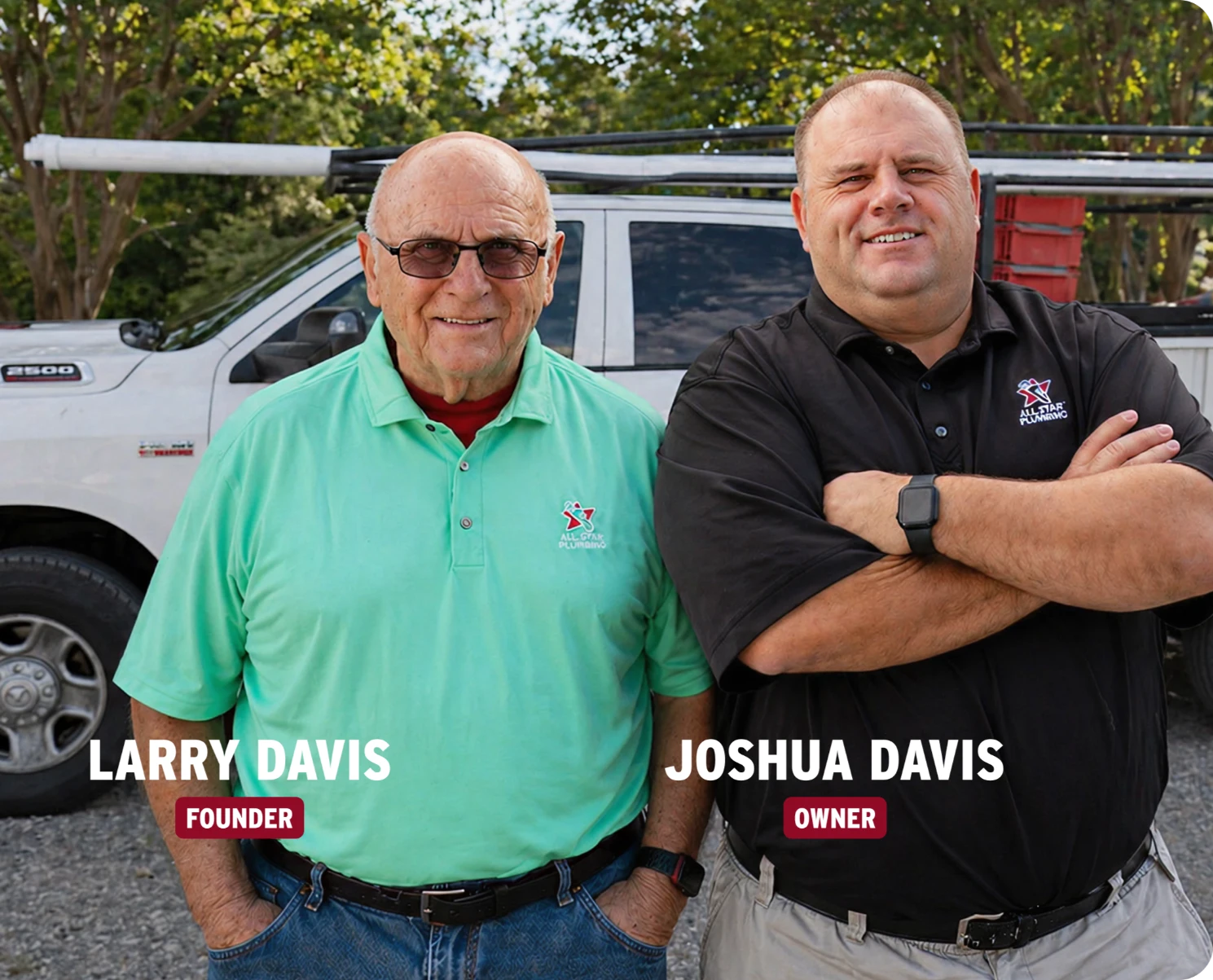
Josh Davis grew up in a plumbing truck. By five years old, he was riding along with his father Larry, watching him work and learning the trade job by job. Larry spent decades in the industry, from installing water heaters for Sears to running his own company, right here in the Triad.
When that chapter closed, the two of them built something new together. All-Star Plumbing opened in April 2007 with a simple idea: show up, fix the problem, and treat every home with respect.
Nearly two decades later, that hasn’t changed. Josh runs the business. Larry is still right there with him. Together with their team, they’ve served families and businesses across High Point, Greensboro, Winston-Salem, and the entire Triad, earning trust the only way they know how: through honest, dependable work.
Completed

Served
Plumbing Experience
Used
Water Quality Services
From testing to treatment, here’s how we help you get better water.
Hard water contains high levels of calcium and magnesium. It’s not a health risk, but it causes problems — scale buildup in pipes, spots on dishes, dry skin and hair, and reduced appliance efficiency.
According to the U.S. Geological Survey, about 85% of American homes have hard water. We test your water’s hardness level and explain what it means for your home.
Signs of hard water: White scale on faucets, spots on glasses, soap that doesn’t lather well, stiff laundry, dry skin after showering.
Water softeners remove the minerals that make water hard. The result: no more scale buildup, better-lathering soap, softer laundry, longer appliance life, and less cleaning.
We install whole-home water softeners sized for your household. We also service and repair existing systems — salt delivery, resin replacement, control valve repairs.
Best for: Homes with hard water causing scale, appliance wear, or comfort issues.
Filtration removes contaminants, sediment, chlorine, and other substances from your water. Options range from under-sink filters for drinking water to whole-home systems that treat every tap.
The EPA regulates public water supplies, but that doesn’t mean your tap water is perfect for your needs. Well water isn’t regulated at all — testing and filtration are your responsibility.
Types we install: Whole-home sediment filters, carbon filters, reverse osmosis systems, UV purification, and specialty filters for specific contaminants.

Additional Water Quality Services
- Well water testing — Check for bacteria, nitrates, and other common well water concerns
- Chlorine/chloramine reduction — Improve taste and smell of municipal water
- Sediment filtration — Remove particles that cloud water or clog fixtures
- Iron and sulfur treatment — Eliminate that “rotten egg” smell and orange staining
- Existing system maintenance — Filter changes, salt refills, repairs
What's Wrong With Your Water?
Tell us what you’re noticing. We’ll point you to the right solution.
- White Scale Buildup on Fixtures
- What it means: You have hard water. Calcium and magnesium are leaving mineral deposits.
- Likely service: Hard Water Test, then Water Softener installation.
- Impact: Scale also builds up inside pipes and water heaters, reducing efficiency and lifespan.
- Water Smells Like Rotten Eggs
- What it means: Hydrogen sulfide gas, usually from well water or water heater bacteria.
- Likely service: Water testing to confirm source, then appropriate Filtration System.
- Note: If only hot water smells, the issue is likely your water heater's anode rod.
- Water Tastes or Smells Like Chlorine
- What it means: Normal for municipal water — chlorine is added for disinfection. But you don't have to drink it.
- Likely service: Carbon Filtration System to remove chlorine taste and smell.
- Options: Whole-home system or under-sink filter for drinking water only.
- Orange or Brown Staining
- What it means: High iron content in your water. Common with well water.
- Likely service: Water testing, then iron removal Filtration System.
- Impact: Iron stains fixtures, laundry, and can affect taste.
- Water Looks Cloudy or Has Particles
- What it means: Sediment in your water supply — sand, silt, or rust particles.
- Likely service: Sediment Filtration System.
- Note: Common with well water or older municipal infrastructure.
- Skin Feels Dry After Showering
- What it means: Likely hard water. Minerals prevent soap from rinsing completely and can dry out skin.
- Likely service: Hard Water Test, then Water Softener.
- Bonus: Soft water also makes hair feel better and laundry softer.
- Concerned About Well Water Safety
- What it means: Well water isn't tested or treated by anyone but you. It's smart to check periodically.
- Likely service: Well water testing for bacteria, nitrates, and common contaminants.
- Recommendation: The EPA recommends testing well water annually for bacteria and nitrates.
Well Water or City Water — Different Challenges
Water quality solutions depend on your water source.
If You Have Well Water
You’re responsible for your own water quality. The EPA doesn’t regulate private wells — testing and treatment are up to you.
Common well water issues: Bacteria, nitrates, iron, sulfur, hardness, sediment, and pH imbalance.
Our recommendation: Test your well water annually at minimum. More often if you notice changes in taste, smell, or appearance.
If You Have City Water
Municipal water is treated and tested, but that doesn’t mean it’s perfect for every home. Chlorine taste, hardness, and old pipes can still affect quality.
Common city water issues: Chlorine taste/smell, hard water, sediment from aging infrastructure, lead from old pipes.
Our recommendation: Test if you notice taste, smell, or appearance issues. Water softeners help with hardness; carbon filters help with chlorine.
Why Water Quality Matters
- Protect Your Plumbing
Hard water scale builds up inside pipes, reducing flow and eventually causing blockages. It coats water heater elements, making them work harder and fail sooner. Soft, clean water extends the life of your entire plumbing system.
- Save Money on Appliances
Water heaters, dishwashers, and washing machines last longer with treated water. The Department of Energy notes that scale buildup forces water heaters to use more energy — soft water keeps them efficient.
- Better for Your Family
Clean, properly treated water is better for drinking, cooking, and bathing. No chlorine taste, no questionable contaminants, no dry skin from hard water.
- Peace of Mind
When you know what’s in your water — and you’ve addressed any issues — you don’t have to wonder. Testing removes the guesswork.
Your Plumbing Problem, Solved in 3 Simple Steps!

Call and speak with a real person
No automated systems or call centers. When you call All-Star Plumbing, a real person answers 24/7, listens to the issue, and schedules help right away so you’re never waiting.

Get Clear Pricing Before Starting
Before any work begins, we explain the problem, walk you through your options, and give clear upfront pricing. You know the cost before we start, no surprises and no pressure.

We Fix the Problem
Our licensed plumbers arrive prepared to fix the issue correctly the first time. If we can’t fix it, you don’t pay. Simple, honest, and backed by our guarantee.

Call and speak with a real person
No automated systems or call centers. When you call All-Star Plumbing, a real person answers 24/7, listens to the issue, and schedules help right away so you’re never waiting.
Get Clear Pricing Before Starting
Before any work begins, we explain the problem, walk you through your options, and give clear upfront pricing. You know the cost before we start, no surprises and no pressure.
We Fix the Problem
Our licensed plumbers arrive prepared to fix the issue correctly the first time. If we can’t fix it, you don’t pay. Simple, honest, and backed by our guarantee.
Helpful Plumbing Tips From Local Experts
Our blog shares clear advice homeowners can use right away.


Locations and Areas Served
Plumber Service Company Serving the Entire Triad
Water Quality Questions
How do I know if I need a water softener?
If you have scale buildup on fixtures, spots on dishes, soap that doesn’t lather well, or dry skin after showering, you likely have hard water. A quick hardness test confirms it.
Is hard water bad for my health?
No — hard water is safe to drink. The issue is what it does to your plumbing, appliances, and comfort. Scale buildup, appliance wear, and dry skin are the main concerns.
How often should I test my well water?
The EPA recommends testing annually for bacteria (coliform) and nitrates. Test more often if you notice changes in taste, smell, or appearance, or after flooding or nearby construction.
What's the difference between a filter and a softener?
A water softener removes hardness minerals (calcium and magnesium). A filter removes contaminants, sediment, chlorine, or other substances. Many homes benefit from both.
Do whole-home systems require maintenance?
Yes, but it’s usually simple. Softeners need salt added periodically. Filters need cartridges replaced on a schedule. We explain maintenance when we install and can help with ongoing service.
How much does a water softener cost?
It depends on the size of your home and water usage. We provide upfront pricing after assessing your needs — no surprises.
Can you fix my existing water softener?
Usually, yes. We repair most brands — control valve issues, resin problems, salt bridges, and more. Sometimes replacement makes more sense than repair, and we’ll tell you honestly which is which.